 Do fundo do mar... Sea bottom

Friday, September 30, 2005
Italians hunt for undersea treasure
_________________________________________________________________
ANSA
September 27, 2005

Cargo of silver and gold was lost off Tuscany 164 years ago.
Rome - A team of Italian divers is preparing to descend into the waters off the island of Elba in search of a massive hoard of gold and silver coins believed to have sunk there in 1841.
The coins, along with an unknown quantity of precious jewels, were being carried secretly aboard a Genoese steamship when it was attacked by a Neapolitan vessel for reasons which remain unclear.
The steamship, the Polluce, sank and all its precious cargo was lost.
But its wreck was recently located at a depth of 103 metres, about five miles out from Elba's main port. Weather conditions permitting, a team of divers will begin the treasure hunt at the start of October, descending to the sea floor in a pressurised chamber and then venturing out to explore.
They will comb the wreck and sift the surrounding sand with equipment similar to that used to recover the black boxes of crashed airliners.
The expedition is being mounted by a private association, the Historical Diving Society of Italy, which has won the sponsorship of regional and national authorities.
Whatever is found will remain the property of the Italian state and so cannot be sold. Instead the HDSI, which has stumped up over 500,000 euros for the operation, intends to set up a travelling exhibition and recover its investment from ticket sales.
"We're not 100% sure there's anything there. It's something of a gamble," admitted Enrico Cappelletti, a writer and diving enthusiast who spearheaded the initiative after extensive research.
Although there have been several attempts to find the legendary treasure, past expeditions never knew exactly where to look and all of them failed.
But in the late 1990s a French historian managed to pinpoint the location from old library records and documents in state archives. He then promptly sold the information to a group of English adventurers .
Forging the necessary authorisations, the group hired the necessary equipment, found the wreck and tried secretly in 2000 to recover its treasure.
But, despite having practically destroyed the wreck in the course of their search, they only managed to find 2,000 coins and a few jewels.
The art squad of the Italian Carabinieri police got wind of the operation and, when the English treasure hunters tried to sell their coins at a London auction house, British detectives stepped in and seized their haul.
Scotland Yard handed the coins over to their Italian colleagues the following year.
Cappelletti investigated the illegal bid made by the English adventurers, and even spoke to some of them. In the process of his enquiries, the precise position of the Polluce eventually emerged.
Soon after the Historical Diving Society of Italy, a group of people interested in underwater archaeology, began planning a new, authorised mission to find the treasure.
Because the details of Polluce's precious cargo were omitted in official documents, several legends have grown up about what it contained. One of them says the ship was also carrying the gold-plated coach of Ferdinand IV, then king of Naples.
____
www.dofundodomar.blogspot.com
ANSA
September 27, 2005
Cargo of silver and gold was lost off Tuscany 164 years ago.
Rome - A team of Italian divers is preparing to descend into the waters off the island of Elba in search of a massive hoard of gold and silver coins believed to have sunk there in 1841.
The coins, along with an unknown quantity of precious jewels, were being carried secretly aboard a Genoese steamship when it was attacked by a Neapolitan vessel for reasons which remain unclear.
The steamship, the Polluce, sank and all its precious cargo was lost.
But its wreck was recently located at a depth of 103 metres, about five miles out from Elba's main port. Weather conditions permitting, a team of divers will begin the treasure hunt at the start of October, descending to the sea floor in a pressurised chamber and then venturing out to explore.
They will comb the wreck and sift the surrounding sand with equipment similar to that used to recover the black boxes of crashed airliners.
The expedition is being mounted by a private association, the Historical Diving Society of Italy, which has won the sponsorship of regional and national authorities.
Whatever is found will remain the property of the Italian state and so cannot be sold. Instead the HDSI, which has stumped up over 500,000 euros for the operation, intends to set up a travelling exhibition and recover its investment from ticket sales.
"We're not 100% sure there's anything there. It's something of a gamble," admitted Enrico Cappelletti, a writer and diving enthusiast who spearheaded the initiative after extensive research.
Although there have been several attempts to find the legendary treasure, past expeditions never knew exactly where to look and all of them failed.
But in the late 1990s a French historian managed to pinpoint the location from old library records and documents in state archives. He then promptly sold the information to a group of English adventurers .
Forging the necessary authorisations, the group hired the necessary equipment, found the wreck and tried secretly in 2000 to recover its treasure.
But, despite having practically destroyed the wreck in the course of their search, they only managed to find 2,000 coins and a few jewels.
The art squad of the Italian Carabinieri police got wind of the operation and, when the English treasure hunters tried to sell their coins at a London auction house, British detectives stepped in and seized their haul.
Scotland Yard handed the coins over to their Italian colleagues the following year.
Cappelletti investigated the illegal bid made by the English adventurers, and even spoke to some of them. In the process of his enquiries, the precise position of the Polluce eventually emerged.
Soon after the Historical Diving Society of Italy, a group of people interested in underwater archaeology, began planning a new, authorised mission to find the treasure.
Because the details of Polluce's precious cargo were omitted in official documents, several legends have grown up about what it contained. One of them says the ship was also carrying the gold-plated coach of Ferdinand IV, then king of Naples.
____
www.dofundodomar.blogspot.com


Sulfurous shipwreck
_________________________________________________________________
Stanford University
September 28, 2005

A conservationist works on Henry VIII's warship, the Mary Rose. The ship wreaked havoc on the French navy for 34 years until she was wrecked in 1545. Salvaged from the sea in 1982, she now rests in the Mary Rose Museum in Portsmouth, England.
Pieces of her helm recently traveled to the Stanford Synchrotron Radiation Laboratory (SSRL) at the Stanford Linear Accelerator Center, and the European Synchrotron Radiation Facility in Grenoble, France, where intense X-rays pierced the wood to analyze the sulfur and iron within.
Led by University of Stockholm Professor Magnus Sandström, researchers had studied another historical treasure, the Swedish warship Vasa, at SSRL in a similar way in 2001 (see http://news-service.stanford.edu/news/2002/february27/vasa-227.html).
This time, Sandström's team is also using a newer technique—they've scanned a small X-ray beam over the oak timbers to map where the different elements reside. Exposed to the oxygen in air, the iron from corroded iron bolts in the ship catalyzes the oxidation of sulfur in the timbers into sulfuric acid, which could slowly degrade the wood until its stability is lost.
The ship is in no immediate danger, however, because the acid gets washed away during conservation. A spray treatment replaces the water in the degraded wood with waxy polyethylene glycol, so the wood does not shrink or crack as it dries out.
The researchers suggest that long-term preservation requires chemical treatments to remove or stabilize the remaining iron and sulfur compounds, and reducing humidity and access to oxygen. Photo courtesy of The Mary Rose Trust.
____
www.dofundodomar.blogspot.com
Stanford University
September 28, 2005
A conservationist works on Henry VIII's warship, the Mary Rose. The ship wreaked havoc on the French navy for 34 years until she was wrecked in 1545. Salvaged from the sea in 1982, she now rests in the Mary Rose Museum in Portsmouth, England.
Pieces of her helm recently traveled to the Stanford Synchrotron Radiation Laboratory (SSRL) at the Stanford Linear Accelerator Center, and the European Synchrotron Radiation Facility in Grenoble, France, where intense X-rays pierced the wood to analyze the sulfur and iron within.
Led by University of Stockholm Professor Magnus Sandström, researchers had studied another historical treasure, the Swedish warship Vasa, at SSRL in a similar way in 2001 (see http://news-service.stanford.edu/news/2002/february27/vasa-227.html).
This time, Sandström's team is also using a newer technique—they've scanned a small X-ray beam over the oak timbers to map where the different elements reside. Exposed to the oxygen in air, the iron from corroded iron bolts in the ship catalyzes the oxidation of sulfur in the timbers into sulfuric acid, which could slowly degrade the wood until its stability is lost.
The ship is in no immediate danger, however, because the acid gets washed away during conservation. A spray treatment replaces the water in the degraded wood with waxy polyethylene glycol, so the wood does not shrink or crack as it dries out.
The researchers suggest that long-term preservation requires chemical treatments to remove or stabilize the remaining iron and sulfur compounds, and reducing humidity and access to oxygen. Photo courtesy of The Mary Rose Trust.
____
www.dofundodomar.blogspot.com
Update: Odyssey Marine to stay on Atlas project for up to six more weeks
_________________________________________________________________
Tampa Bay Business Journal
September 28, 2005
Odyssey Marine Exploration said it would continue work on a shipwreck search project as long as the weather remains favorable for operations.
The "Atlas" project involves a search for five, high-value shipwrecks in an area encompassing more than 5,000 square miles. Since announcing the start of the project on May 4, Odyssey has searched more than 3,700 square miles and located more than 2,100 anomalies on the sea floor using an advanced high-resolution side-scan sonar system. More than 400 of 1,000 of the anomalies selected for inspection have been visually inspected with ZEUS, its remote-operated vehicle.
"During the past five months of our 'Atlas' project, we've searched an area larger than all our previous shipwreck searches combined," said Greg Stemm, co-founder of Odyssey Marine Exploration, in a release.
Odyssey said it expects work on the Atlas project to continue another two to six weeks, depending on weather patterns this fall. Odyssey plans to resume search operations in the "Atlas" area when weather permits in 2006.
After the weather window closes for the Odyssey Explorer on the "Atlas" project for 2005, Odyssey plans to relocate the ship to the Western Mediterranean, where work can continue through the winter. Immediately after mobilization of additional equipment and the archaeological team, it plans to begin operations on the shipwreck site believed to be HMS Sussex.
"We're pleased that by working together with the United Kingdom, Spain and the Junta de Andalucia, we have been able to develop a cooperative relationship that allows us to proceed with the Sussex in a collaborative and friendly manner," said John Morris, Odyssey's CEO and co-founder, in a release.
HMS Sussex was a large 80-gun English warship that sank in 1694 with a reported large cargo of money. The ship remains the exclusive property of the Government of the United Kingdom and Odyssey has an exclusive partnering agreement for the archaeological excavation of the Sussex.
____
www.dofundodomar.blogspot.com
Tampa Bay Business Journal
September 28, 2005
Odyssey Marine Exploration said it would continue work on a shipwreck search project as long as the weather remains favorable for operations.
The "Atlas" project involves a search for five, high-value shipwrecks in an area encompassing more than 5,000 square miles. Since announcing the start of the project on May 4, Odyssey has searched more than 3,700 square miles and located more than 2,100 anomalies on the sea floor using an advanced high-resolution side-scan sonar system. More than 400 of 1,000 of the anomalies selected for inspection have been visually inspected with ZEUS, its remote-operated vehicle.
"During the past five months of our 'Atlas' project, we've searched an area larger than all our previous shipwreck searches combined," said Greg Stemm, co-founder of Odyssey Marine Exploration, in a release.
Odyssey said it expects work on the Atlas project to continue another two to six weeks, depending on weather patterns this fall. Odyssey plans to resume search operations in the "Atlas" area when weather permits in 2006.
After the weather window closes for the Odyssey Explorer on the "Atlas" project for 2005, Odyssey plans to relocate the ship to the Western Mediterranean, where work can continue through the winter. Immediately after mobilization of additional equipment and the archaeological team, it plans to begin operations on the shipwreck site believed to be HMS Sussex.
"We're pleased that by working together with the United Kingdom, Spain and the Junta de Andalucia, we have been able to develop a cooperative relationship that allows us to proceed with the Sussex in a collaborative and friendly manner," said John Morris, Odyssey's CEO and co-founder, in a release.
HMS Sussex was a large 80-gun English warship that sank in 1694 with a reported large cargo of money. The ship remains the exclusive property of the Government of the United Kingdom and Odyssey has an exclusive partnering agreement for the archaeological excavation of the Sussex.
____
www.dofundodomar.blogspot.com
Thursday, September 29, 2005
NAS 2005 ANNUAL CONFERENCE ANNOUNCEMENT
_________________________________________________________________
NAS
September 2005
The Nautical Archaeology Society Annual Conference, Portsmouth: 12/13 November 2005.
Featuring presentations from a range of professional and amateur archaeologists, the 2005 NAS Annual Conference will provide an opportunity to discuss research, review the archaeological activities of members and exchange ideas on managing our maritime heritage on both a national and international level. The speakers will include:
· Anton Englert (Viking Ship Museum, Roskilde)
· Robert Parthesius (Avondster Project, Amsterdam)
· Joe Flatman (Institute of Archaeology, University College London)
· Jens Auer (Wessex Archaeology)
· Waldemar Ossowski (Polish National Maritime Museum, Gdansk)
· Lucy Blue (Centre for Maritime Archaeology, Southampton)
Supported by Action Stations, the event will also incorporate the 2005 NAS AGM. the 3rd Annual Adopt-A-Wreck Award, and the Inaugral NAS Photographic Competition.
For full details of the conference, speakers and post-conference programme and information about how to register, please visit the Conference pages of the NAS Website: http://www.nasportsmouth.org.uk/news/conference2005.php or email the conference organiser, Sarah Ward: sarah@nasportsmouth.org.uk.
____
www.dofundodomar.blogspot.com
NAS
September 2005
The Nautical Archaeology Society Annual Conference, Portsmouth: 12/13 November 2005.
Featuring presentations from a range of professional and amateur archaeologists, the 2005 NAS Annual Conference will provide an opportunity to discuss research, review the archaeological activities of members and exchange ideas on managing our maritime heritage on both a national and international level. The speakers will include:
· Anton Englert (Viking Ship Museum, Roskilde)
· Robert Parthesius (Avondster Project, Amsterdam)
· Joe Flatman (Institute of Archaeology, University College London)
· Jens Auer (Wessex Archaeology)
· Waldemar Ossowski (Polish National Maritime Museum, Gdansk)
· Lucy Blue (Centre for Maritime Archaeology, Southampton)
Supported by Action Stations, the event will also incorporate the 2005 NAS AGM. the 3rd Annual Adopt-A-Wreck Award, and the Inaugral NAS Photographic Competition.
For full details of the conference, speakers and post-conference programme and information about how to register, please visit the Conference pages of the NAS Website: http://www.nasportsmouth.org.uk/news/conference2005.php or email the conference organiser, Sarah Ward: sarah@nasportsmouth.org.uk.
____
www.dofundodomar.blogspot.com
Call for Papers - IN POSEIDONS REICH XI
_________________________________________________________________
DEGUWA
September 28, 2005
The German Society for the Promotion of Underwater Archaeology (DEGUWA) sincerely invites to the "In Poseidons Reich XI" conference, which is organised in conjunction with the Institute for Archaeological Sciences at the Johann-Wolfgang-Goethe University of Frankfurt a. M. It will be held on 17th – 19th February 2006 in the rooms of the latter institution. The topic is:
TRANSPORT CERAMICS: An article of mass production as key to the history of economics and trade in the ancient world.
We encourage contributions on classifications, petrological analyses on provenience, epigraphic features etc. with the aim to elucidate the economic organisation of the ancient Mediterranean. This will be an interdisciplinary conference in two respects: Firstly it aims to splice the humanities with the sciences. Secondly it will be a venue for archaeologists who study places of amphora & pithoi production and discard on land and for those who study the same commodities under water as cargoes of shipwrecks.
If you intend to submit a paper or just participate, please refer to the following address. The closing date for announcing contributions is 15.11.2005.
DEGUWA Secretariat
Hetzelsdorf 33
91362 Pretzfeld
Germany
Tel: +49 (0)9197 625889
Fax: +49 (0)9197 1684
E-mail: info@deguwa.org.
Please refer to our website for further information about the DEGUWA. The official Call for Papers is downloadable as PDF-file http://www.deguwa.org/en/conferences/.
The English version, however, is still under construction and many more features will follow in due time.
____
www.dofundodomar.blogspot.com
DEGUWA
September 28, 2005
The German Society for the Promotion of Underwater Archaeology (DEGUWA) sincerely invites to the "In Poseidons Reich XI" conference, which is organised in conjunction with the Institute for Archaeological Sciences at the Johann-Wolfgang-Goethe University of Frankfurt a. M. It will be held on 17th – 19th February 2006 in the rooms of the latter institution. The topic is:
TRANSPORT CERAMICS: An article of mass production as key to the history of economics and trade in the ancient world.
We encourage contributions on classifications, petrological analyses on provenience, epigraphic features etc. with the aim to elucidate the economic organisation of the ancient Mediterranean. This will be an interdisciplinary conference in two respects: Firstly it aims to splice the humanities with the sciences. Secondly it will be a venue for archaeologists who study places of amphora & pithoi production and discard on land and for those who study the same commodities under water as cargoes of shipwrecks.
If you intend to submit a paper or just participate, please refer to the following address. The closing date for announcing contributions is 15.11.2005.
DEGUWA Secretariat
Hetzelsdorf 33
91362 Pretzfeld
Germany
Tel: +49 (0)9197 625889
Fax: +49 (0)9197 1684
E-mail: info@deguwa.org.
Please refer to our website for further information about the DEGUWA. The official Call for Papers is downloadable as PDF-file http://www.deguwa.org/en/conferences/.
The English version, however, is still under construction and many more features will follow in due time.
____
www.dofundodomar.blogspot.com
Wednesday, September 28, 2005
Preserving a 460 year old wreck
_________________________________________________________________
ESRF
September 26, 2005
An international team of researchers has analysed the sulphur and iron composition in the wooden timbers of the Mary Rose, an English warship wrecked in 1545, which was salvaged two decades ago. The team used synchrotron X-rays from the Stanford Synchrotron Radiation Laboratory (USA) and the European Synchrotron Radiation Facility (France) in order to determine the chemical state of the surprisingly large quantities of sulphur and iron found in the ship. These new results provide insight to the state of this historic vessel and should aid preservation efforts. They are published this week in the Proceedings of the National Academy of Sciences Early Edition.

The Mary Rose served as English King Henry VIII's principal warship for 35 years until she went down outside of Portsmouth in 1545. In 1982 the hull was recovered from the sea and is currently undergoing a conservation process. The first author of the publication, Magnus Sandström, and his colleagues showed recently that the accumulation of sulphur within shipwrecks preserved in seawater is common by studying the Swedish warship Vasa, which remained on the seabed for 333 years. Their research concluded that sulphur in contact with oxygen could pose conservation problems. Over time, sulphur can convert to sulphuric acid, which slowly degrades the wood until the hull's stability is lost.
The authors examined the Mary Rose to determine the potential threat and found about 2 tons of sulphur in different compounds rather uniformly distributed within the 280-ton hull. To determine the sulphur species present in the wood, researchers first carried out experiments at SSRL. The team needed to obtain complimentary information in order to know the precise location of sulphur species at the micron scale and they then came to the ESRF. By studying thin wood slices perpendicularly cut to the cell walls at X-ray microscopy beamline ID21, they found high concentrations of organo-sulphur compounds in the lignin-rich areas between the cells, which may have helped preserve the ship while it was submerged in the seawater. This helped to understand how accessible and reactive the different sulphur compounds found are to acid-producing oxidation.
Plenty of iron and pyrite is also present in the Mary Rose, which is a concern, since in the moist wood iron ions can catalyse the conversion of sulphur to sulphuric acid in the presence of oxygen. The authors suggest that chemical treatments to remove or stabilize the remaining iron and sulphur compounds, and reducing humidity and oxygen access, are requirements for long-term preservation.
At the Mary Rose Trust they are already investigating new treatments to prevent new acid formation. For slowing down the organo-sulphur oxidation reaction and prevent new acid formation, wood samples from the Mary Rose are being treated with antioxidants in combination with low and high grade polyethylene glycol (PEG). Another approach to slow down acid formation in PEG treated conserved archaeological wood is to maintain it in a stable climate. It is hoped that keeping a constant low humidity of 50-55% without variations of temperature will stop changes in sulphur speciation. To maintain a stable microclimate within the wood structure a surface coating offers a possible solution, although the effectiveness of this approach has yet to be tested. “This ongoing research is considered to be an important step forward in devising improvements to the current Mary Rose hull treatment programme”, explains Mark Jones, curator of the Mary Rose.
____
www.dofundodomar.blogspot.com
ESRF
September 26, 2005
An international team of researchers has analysed the sulphur and iron composition in the wooden timbers of the Mary Rose, an English warship wrecked in 1545, which was salvaged two decades ago. The team used synchrotron X-rays from the Stanford Synchrotron Radiation Laboratory (USA) and the European Synchrotron Radiation Facility (France) in order to determine the chemical state of the surprisingly large quantities of sulphur and iron found in the ship. These new results provide insight to the state of this historic vessel and should aid preservation efforts. They are published this week in the Proceedings of the National Academy of Sciences Early Edition.
The Mary Rose served as English King Henry VIII's principal warship for 35 years until she went down outside of Portsmouth in 1545. In 1982 the hull was recovered from the sea and is currently undergoing a conservation process. The first author of the publication, Magnus Sandström, and his colleagues showed recently that the accumulation of sulphur within shipwrecks preserved in seawater is common by studying the Swedish warship Vasa, which remained on the seabed for 333 years. Their research concluded that sulphur in contact with oxygen could pose conservation problems. Over time, sulphur can convert to sulphuric acid, which slowly degrades the wood until the hull's stability is lost.
The authors examined the Mary Rose to determine the potential threat and found about 2 tons of sulphur in different compounds rather uniformly distributed within the 280-ton hull. To determine the sulphur species present in the wood, researchers first carried out experiments at SSRL. The team needed to obtain complimentary information in order to know the precise location of sulphur species at the micron scale and they then came to the ESRF. By studying thin wood slices perpendicularly cut to the cell walls at X-ray microscopy beamline ID21, they found high concentrations of organo-sulphur compounds in the lignin-rich areas between the cells, which may have helped preserve the ship while it was submerged in the seawater. This helped to understand how accessible and reactive the different sulphur compounds found are to acid-producing oxidation.
Plenty of iron and pyrite is also present in the Mary Rose, which is a concern, since in the moist wood iron ions can catalyse the conversion of sulphur to sulphuric acid in the presence of oxygen. The authors suggest that chemical treatments to remove or stabilize the remaining iron and sulphur compounds, and reducing humidity and oxygen access, are requirements for long-term preservation.
At the Mary Rose Trust they are already investigating new treatments to prevent new acid formation. For slowing down the organo-sulphur oxidation reaction and prevent new acid formation, wood samples from the Mary Rose are being treated with antioxidants in combination with low and high grade polyethylene glycol (PEG). Another approach to slow down acid formation in PEG treated conserved archaeological wood is to maintain it in a stable climate. It is hoped that keeping a constant low humidity of 50-55% without variations of temperature will stop changes in sulphur speciation. To maintain a stable microclimate within the wood structure a surface coating offers a possible solution, although the effectiveness of this approach has yet to be tested. “This ongoing research is considered to be an important step forward in devising improvements to the current Mary Rose hull treatment programme”, explains Mark Jones, curator of the Mary Rose.
____
www.dofundodomar.blogspot.com
Ancient boat just won't float
_________________________________________________________________
The Daily Pennsylvanian
By Zoe Tillman
September 27, 2005

The Magan III was Anthropology
professor Gregory Possehl's attempt
to recreate a Bronze Age boat.
It sank after several hours.
After first failure, Penn Museum curator to set out again on Bronze Age boat
Anthropology professor Gregory Possehl's boat currently rests 6,000 feet beneath the Arabian Sea.
After only hours on the water, the Magan III, a 40-foot boat made of reeds and bitumen -- a tar-like substance -- began sinking as heavy winds rocked the craft and water spilled over the sides.
"At 8:30, I heard the boat was in trouble, and at about 10 to nine I heard the boat had sunk," said Possehl, curator of the University Museum of Archaeology and Anthropology's Asian section.
Possehl was quick to add that no one on board was harmed, since the Magan III, although meant to be a replica of an ancient vessel, was equipped with a life boat and life jackets.
The Magan III's journey began earlier that day -- Sept. 7 -- at a harbor in Sur, Oman.
After boarding a ship belonging to the sultan of Oman, Possehl and his colleagues -- Maurizio Tosi, Serge Cleuziou and Tom Vosmer -- watched as "the boat was towed out of Sur harbor into the open sea with eight people on board."
For the first few hours, Possehl recalled, the sea was calm. By 5 p.m., though, the wind picked up and the boat began to quickly take on water.
Sensing the boat's imminent fate, the crew abandoned the ship and its contents -- which included a traditional complement of dates, dried fish, honey and water.
The abrupt end of the Magan III's journey brought Possehl back to Penn.
In retrospect, Possehl blamed the boat's demise on "a design flaw that further sea trials may have discovered."
The idea of building a boat to replicate the journey of ancient mariners from Oman to India first began in 1995. An excavation in Oman that was part of the Joint Hadd Project -- an archaeological project which studies the easternmost tip of Saudi Arabia-- found 200 pieces of bitumen covered with sea barnacles.
Indus civilization pottery carbon-dated to 2400 B.C. was found with the bitumen, suggesting that sea trade been conducted throughout the Arabian Sea at that date.
To prove this theory, Possehl, Vosmer and Joint Hadd Project co-directors Tosi and Cleuziou -- curator of maritime history at Australia's Perth Museum -- took a hands-on approach and began building boat models based on existing archaeological data.
Possehl stressed the authenticity of the boats.
"We made our own rope, gathered our own reed, made our own sail from woven wool, and we imported the bitumen from Iraq."
After they successfully built and and tested two earlier versions of the craft, the Magans I and II, the government of Oman approached Possehl and his colleagues in February 2005 with an offer to fund the construction of a full-sized model, the since-lost Magan III.
Despite the Magan III's unsuccessful voyage, Possehl was confident that this was not the last time such a project would be attempted. Plans are already under way, he said, for the construction of the Magan IV and V.
____
www.dofundodomar.blogspot.com
The Daily Pennsylvanian
By Zoe Tillman
September 27, 2005
The Magan III was Anthropology
professor Gregory Possehl's attempt
to recreate a Bronze Age boat.
It sank after several hours.
After first failure, Penn Museum curator to set out again on Bronze Age boat
Anthropology professor Gregory Possehl's boat currently rests 6,000 feet beneath the Arabian Sea.
After only hours on the water, the Magan III, a 40-foot boat made of reeds and bitumen -- a tar-like substance -- began sinking as heavy winds rocked the craft and water spilled over the sides.
"At 8:30, I heard the boat was in trouble, and at about 10 to nine I heard the boat had sunk," said Possehl, curator of the University Museum of Archaeology and Anthropology's Asian section.
Possehl was quick to add that no one on board was harmed, since the Magan III, although meant to be a replica of an ancient vessel, was equipped with a life boat and life jackets.
The Magan III's journey began earlier that day -- Sept. 7 -- at a harbor in Sur, Oman.
After boarding a ship belonging to the sultan of Oman, Possehl and his colleagues -- Maurizio Tosi, Serge Cleuziou and Tom Vosmer -- watched as "the boat was towed out of Sur harbor into the open sea with eight people on board."
For the first few hours, Possehl recalled, the sea was calm. By 5 p.m., though, the wind picked up and the boat began to quickly take on water.
Sensing the boat's imminent fate, the crew abandoned the ship and its contents -- which included a traditional complement of dates, dried fish, honey and water.
The abrupt end of the Magan III's journey brought Possehl back to Penn.
In retrospect, Possehl blamed the boat's demise on "a design flaw that further sea trials may have discovered."
The idea of building a boat to replicate the journey of ancient mariners from Oman to India first began in 1995. An excavation in Oman that was part of the Joint Hadd Project -- an archaeological project which studies the easternmost tip of Saudi Arabia-- found 200 pieces of bitumen covered with sea barnacles.
Indus civilization pottery carbon-dated to 2400 B.C. was found with the bitumen, suggesting that sea trade been conducted throughout the Arabian Sea at that date.
To prove this theory, Possehl, Vosmer and Joint Hadd Project co-directors Tosi and Cleuziou -- curator of maritime history at Australia's Perth Museum -- took a hands-on approach and began building boat models based on existing archaeological data.
Possehl stressed the authenticity of the boats.
"We made our own rope, gathered our own reed, made our own sail from woven wool, and we imported the bitumen from Iraq."
After they successfully built and and tested two earlier versions of the craft, the Magans I and II, the government of Oman approached Possehl and his colleagues in February 2005 with an offer to fund the construction of a full-sized model, the since-lost Magan III.
Despite the Magan III's unsuccessful voyage, Possehl was confident that this was not the last time such a project would be attempted. Plans are already under way, he said, for the construction of the Magan IV and V.
____
www.dofundodomar.blogspot.com
Tuesday, September 27, 2005
History Buffs Search for Hulk of Civil War Submarine
_________________________________________________________________
news10.net
September 27, 2005

A cylindrical "monster" made of iron erratically plies the Delaware River between Philadelphia and South Jersey, causing panic in a region gripped by war fever.
Harbor police chase the frightening contraption, running it aground on a small island near Camden. Having "chained" the vessel to a pier, harbor police seize its crew.
The scene could be something out the vivid imagination of Jules Verne or H.G. Wells.
But it's not. It's May 1861. The Civil War is barely a month old. The contraption is a "diving machine," developed by French inventor Brutus de Villeroi and described in a period newspaper story as "half aquatic, half aerial and wholly incomprehensible."
Nearly 145 years after this strange foray, possibly a publicity stunt by its inventor, a small group of local historians is searching for the submarine, believing the mystery machine may still rest in the muck somewhere along the Rancocas Creek here.
It's now being called Alligator Jr. because it was the smaller prototype of the U.S. Navy's first submarine, the U.S.S. Alligator, the subject of an ongoing search off the coast of North Carolina and a Science Channel documentary that will air Oct. 5.
For a Delran woman, the fate of the prototype is every bit as interesting as the search for the Alligator itself.
"The fact that there was this submarine in our backyard, in our creek, is really hard to believe," said Alice Smith, a 57-year-old archivist with the Riverside Historical Society.
She has spent the past year digging into Alligator Jr.'s past, trying to determine what ever happened to de Villeroi's Delaware River "submarine boat."
The chief scientist for the expedition pursuing the actual Alligator believes Smith may have a better chance finding her sub than he has finding the Alligatorbecause the Rancocas search area is much smaller.
"It sounds promising, very promising," said Michael Overfield of the National Oceanic and Atmospheric Administration.
Alligator Jr.'s discovery would give his team important insights into how the submarine was constructed, especially important if the Alligator is never found, he said.
The prototype was built with a propeller but the first version of the Alligator had an unusual system of oars designed to work underwater that was supposed to increase maneuverability.
But the Navy found this sacrificed speed and the Alligator was refitted with a hand-cranked propeller before it disappeared off North Carolina during a storm.
Little evidence remains of either submarine other than newspaper accounts, letters and some general design plans.
Overfield hopes the discovery of the Union's Alligator will complement the discovery of the Confederate submarine H.L. Hunley off South Carolina in 1995.
That submarine, pulled up along with the remains of its crew, sank in 1864 during its attack on the Union warship Housatonic; the attack marked the first sinking of a warship by a submarine.
"This ties into the maritime heritage of our country, a piece of our history that has been forgotten," Overfield said of the search for the Alligator.
It was to be President Lincoln's secret weapon; it is believed that Lincoln even observed trial runs.Smith presents a compelling case that its prototype is still somewhere to be found in marshes along the Rancocas. Her case is based on newspaper accounts, letters and interviews of residents who remember playing around rusted debris that could have been de Villeroi's "submarine boat."
"If it's out there, it's probably a heap of rust that would disintegrate if you tried to move it," Smith said.
Aside from the possibility of a search plane equipped with a specialized metal detector, there is little NOAA or the Navy could provide to complement the local effort, Overfield said.
Hand-held metal detectors, small boats and walking -- methods employed by members of the historical society -- are the best search methods for the marshes around the Rancocas, he said.
"I don't think advanced technology is going to help in that environment," he said.
Overfield's team made its third attempt to search for the Alligator off Cape Hatteras earlier this month. The search was cut short after just one day because of the approach of Hurricane Ophelia.
The Alligator left the Philadelphia Navy Yard in June 1862. The Navy pressed de Villeroi to have it available to take part in the famed encounter between the ironclads Monitor and Merrimac but the submarine wasn't ready in time.
The Alligator was later deemed too hard to steer to attempt another mission: clearing mines from Virginia's James River, highway to the Confederacy's capital at Richmond.
It was being towed to take part in Union operations against Charleston, S.C., when a bad storm forced the crew of the tow ship to cut the Alligator free. It slid into the "Graveyard of the Atlantic," an area notorious for bad storms and shipwrecks.
At this point, investigators can only make educated guesses as to where it lies. It may have drifted before sinking and coordinates given of where the sub was cut free could be wrong.
Complicating matters even more, the search area straddles the sharp drop-off of the continental shelf, meaning the Alligator could be in shallow water or very deep water.
The NOAA-led team has been scouring an area of 150 square nautical miles located about 30 miles off Ocracoke, N.C.Smith has a much smaller area to search, no more than a few square miles. But she's faced with limited assets and the prospect of not knowing exactly where to look.
She has decided to begin the search on a marshy ditch off the Rancocas in Riverside. It's across from Delanco, which Smith believes served as a base for the crew of the prototype.
At one time the ditch was straight; it now has a bend. Smith believes this is a clue.
"I believe a storm or hurricane dislodged (the submarine) and it blocked the ditch," Smith said. "The water had to find a different way to flow out. It's just a hunch."
But undergrowth was too thick during the first search; an attempt to go up the ditch in a small boat last month was also unsuccessful.
The society plans another walking search in the late fall or early winter, when vegetation dies back.
Riverside resident Bud Eldridge, 61, trapped muskrats, fished, hunted and played along the creek as a boy. He believes the searchers are looking in the wrong place.
He recalls seeing large rusting chains and a rusting pipe with a partially opened lid protruding from the mud about 20 feet from the edge of the creek. That was some 45 years ago.
The site is farther up the creek, near the old railroad bridge that has since been rebuilt to carry the light-rail line across the creek.
Eldridge now believes this pipe and lid could have been the sub's hatch. "It never occurred to me at the time that it could have been a submarine, he said.
Even then the structure was badly rusted. "It would be neat to know that years ago that's what we were playing on. But I can't see how anything would be left of it," he said.
While severe deterioration is a strong possibility, Overvield said, the sub would be well preserved if much of it was resting in the relatively oxygen-free environment of mud.
"There's a good chance it sank into the mud and has been laying there forgotten, like the Alligator has been," he said. "There are pessimists and there are optimists; I prefer to be an optimist."
____
www.dofundodomar.blogspot.com
news10.net
September 27, 2005
A cylindrical "monster" made of iron erratically plies the Delaware River between Philadelphia and South Jersey, causing panic in a region gripped by war fever.
Harbor police chase the frightening contraption, running it aground on a small island near Camden. Having "chained" the vessel to a pier, harbor police seize its crew.
The scene could be something out the vivid imagination of Jules Verne or H.G. Wells.
But it's not. It's May 1861. The Civil War is barely a month old. The contraption is a "diving machine," developed by French inventor Brutus de Villeroi and described in a period newspaper story as "half aquatic, half aerial and wholly incomprehensible."
Nearly 145 years after this strange foray, possibly a publicity stunt by its inventor, a small group of local historians is searching for the submarine, believing the mystery machine may still rest in the muck somewhere along the Rancocas Creek here.
It's now being called Alligator Jr. because it was the smaller prototype of the U.S. Navy's first submarine, the U.S.S. Alligator, the subject of an ongoing search off the coast of North Carolina and a Science Channel documentary that will air Oct. 5.
For a Delran woman, the fate of the prototype is every bit as interesting as the search for the Alligator itself.
"The fact that there was this submarine in our backyard, in our creek, is really hard to believe," said Alice Smith, a 57-year-old archivist with the Riverside Historical Society.
She has spent the past year digging into Alligator Jr.'s past, trying to determine what ever happened to de Villeroi's Delaware River "submarine boat."
The chief scientist for the expedition pursuing the actual Alligator believes Smith may have a better chance finding her sub than he has finding the Alligatorbecause the Rancocas search area is much smaller.
"It sounds promising, very promising," said Michael Overfield of the National Oceanic and Atmospheric Administration.
Alligator Jr.'s discovery would give his team important insights into how the submarine was constructed, especially important if the Alligator is never found, he said.
The prototype was built with a propeller but the first version of the Alligator had an unusual system of oars designed to work underwater that was supposed to increase maneuverability.
But the Navy found this sacrificed speed and the Alligator was refitted with a hand-cranked propeller before it disappeared off North Carolina during a storm.
Little evidence remains of either submarine other than newspaper accounts, letters and some general design plans.
Overfield hopes the discovery of the Union's Alligator will complement the discovery of the Confederate submarine H.L. Hunley off South Carolina in 1995.
That submarine, pulled up along with the remains of its crew, sank in 1864 during its attack on the Union warship Housatonic; the attack marked the first sinking of a warship by a submarine.
"This ties into the maritime heritage of our country, a piece of our history that has been forgotten," Overfield said of the search for the Alligator.
It was to be President Lincoln's secret weapon; it is believed that Lincoln even observed trial runs.Smith presents a compelling case that its prototype is still somewhere to be found in marshes along the Rancocas. Her case is based on newspaper accounts, letters and interviews of residents who remember playing around rusted debris that could have been de Villeroi's "submarine boat."
"If it's out there, it's probably a heap of rust that would disintegrate if you tried to move it," Smith said.
Aside from the possibility of a search plane equipped with a specialized metal detector, there is little NOAA or the Navy could provide to complement the local effort, Overfield said.
Hand-held metal detectors, small boats and walking -- methods employed by members of the historical society -- are the best search methods for the marshes around the Rancocas, he said.
"I don't think advanced technology is going to help in that environment," he said.
Overfield's team made its third attempt to search for the Alligator off Cape Hatteras earlier this month. The search was cut short after just one day because of the approach of Hurricane Ophelia.
The Alligator left the Philadelphia Navy Yard in June 1862. The Navy pressed de Villeroi to have it available to take part in the famed encounter between the ironclads Monitor and Merrimac but the submarine wasn't ready in time.
The Alligator was later deemed too hard to steer to attempt another mission: clearing mines from Virginia's James River, highway to the Confederacy's capital at Richmond.
It was being towed to take part in Union operations against Charleston, S.C., when a bad storm forced the crew of the tow ship to cut the Alligator free. It slid into the "Graveyard of the Atlantic," an area notorious for bad storms and shipwrecks.
At this point, investigators can only make educated guesses as to where it lies. It may have drifted before sinking and coordinates given of where the sub was cut free could be wrong.
Complicating matters even more, the search area straddles the sharp drop-off of the continental shelf, meaning the Alligator could be in shallow water or very deep water.
The NOAA-led team has been scouring an area of 150 square nautical miles located about 30 miles off Ocracoke, N.C.Smith has a much smaller area to search, no more than a few square miles. But she's faced with limited assets and the prospect of not knowing exactly where to look.
She has decided to begin the search on a marshy ditch off the Rancocas in Riverside. It's across from Delanco, which Smith believes served as a base for the crew of the prototype.
At one time the ditch was straight; it now has a bend. Smith believes this is a clue.
"I believe a storm or hurricane dislodged (the submarine) and it blocked the ditch," Smith said. "The water had to find a different way to flow out. It's just a hunch."
But undergrowth was too thick during the first search; an attempt to go up the ditch in a small boat last month was also unsuccessful.
The society plans another walking search in the late fall or early winter, when vegetation dies back.
Riverside resident Bud Eldridge, 61, trapped muskrats, fished, hunted and played along the creek as a boy. He believes the searchers are looking in the wrong place.
He recalls seeing large rusting chains and a rusting pipe with a partially opened lid protruding from the mud about 20 feet from the edge of the creek. That was some 45 years ago.
The site is farther up the creek, near the old railroad bridge that has since been rebuilt to carry the light-rail line across the creek.
Eldridge now believes this pipe and lid could have been the sub's hatch. "It never occurred to me at the time that it could have been a submarine, he said.
Even then the structure was badly rusted. "It would be neat to know that years ago that's what we were playing on. But I can't see how anything would be left of it," he said.
While severe deterioration is a strong possibility, Overvield said, the sub would be well preserved if much of it was resting in the relatively oxygen-free environment of mud.
"There's a good chance it sank into the mud and has been laying there forgotten, like the Alligator has been," he said. "There are pessimists and there are optimists; I prefer to be an optimist."
____
www.dofundodomar.blogspot.com
Monday, September 26, 2005
"Naufrágios e Acidentes Marítimos do Litoral Cascaense"
_________________________________________________________________
Do Fundo do Mar
September 26, 2005
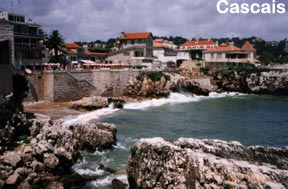
Irá ser lançado amanhã, 27 de Setembro, o livro Naufrágios e Acidentes Marítimos do Litoral Cascaense com autoria de Manuel Eugénio e Guilherme Cardoso.
A apresentação do livro terá início às 18 horas no Salão Nobre da Junta de Freguesia de Cascais e será feita pelo Prof. Doutor José d'Encarnação.
O acto será presidido pelo Presidente da Câmara de Cascais.
____
www.dofundodomar.blogspot.com
Do Fundo do Mar
September 26, 2005
Irá ser lançado amanhã, 27 de Setembro, o livro Naufrágios e Acidentes Marítimos do Litoral Cascaense com autoria de Manuel Eugénio e Guilherme Cardoso.
A apresentação do livro terá início às 18 horas no Salão Nobre da Junta de Freguesia de Cascais e será feita pelo Prof. Doutor José d'Encarnação.
O acto será presidido pelo Presidente da Câmara de Cascais.
____
www.dofundodomar.blogspot.com
8,000-year-old dug out canoe on show in Italy
_________________________________________________________________
Stone Pages
September 25, 2005
There is a star attraction at the International Conference of Experimental Archaeology which opened in Anguillara (Lazio, Italy). It's a dug out canoe built 8,000 years ago by primitive people who had set up camp along the shores of Lake Bracciano. 9.5 m long, according to initial studies, the canoe will enable archaeologists to understand the naval construction techniques of this type of craft which, in those days, could also go out into the open sea. The boat, which was found last summer near what is believed to have been a shipyard, is unfinished.
"At the moment, the canoe has been put inside a reliquary full of special liquid to conserve it. The important date is when it's going to be restored. It will be given by the Monuments and Fine Arts Office to a firm that specialises in this sort of work, which will be done on the premises. Even visitors and scholars will be able to see the techniques during the entire period it is being restored," said Carmelo Capone, the councillor responsible for tourism and productive activities in Anguillara.
This exceptional discovery also opens up a new prospective for researching the peoples who lived in central Italy during the Neolithic period and in the Bronze Age. In fact, it is known that in the second half of the 5th millennium before Christ, some people coming from the sea, went up the Arrone river, the effluent of Lake Bracciano, where Anguillara Sabazia is located, to reach and then settle below what is today the headland of the place called "La Marmotta". Moreover, it happened before the Neolithic settlement that until now has been found on the shores of only one lake in the whole of Europe. In fact, some villages around lakes in Germany, France and Switzerland only came into being up to ten centuries later.
____
www.dofundodomar.blogspot.com
Stone Pages
September 25, 2005
There is a star attraction at the International Conference of Experimental Archaeology which opened in Anguillara (Lazio, Italy). It's a dug out canoe built 8,000 years ago by primitive people who had set up camp along the shores of Lake Bracciano. 9.5 m long, according to initial studies, the canoe will enable archaeologists to understand the naval construction techniques of this type of craft which, in those days, could also go out into the open sea. The boat, which was found last summer near what is believed to have been a shipyard, is unfinished.
"At the moment, the canoe has been put inside a reliquary full of special liquid to conserve it. The important date is when it's going to be restored. It will be given by the Monuments and Fine Arts Office to a firm that specialises in this sort of work, which will be done on the premises. Even visitors and scholars will be able to see the techniques during the entire period it is being restored," said Carmelo Capone, the councillor responsible for tourism and productive activities in Anguillara.
This exceptional discovery also opens up a new prospective for researching the peoples who lived in central Italy during the Neolithic period and in the Bronze Age. In fact, it is known that in the second half of the 5th millennium before Christ, some people coming from the sea, went up the Arrone river, the effluent of Lake Bracciano, where Anguillara Sabazia is located, to reach and then settle below what is today the headland of the place called "La Marmotta". Moreover, it happened before the Neolithic settlement that until now has been found on the shores of only one lake in the whole of Europe. In fact, some villages around lakes in Germany, France and Switzerland only came into being up to ten centuries later.
____
www.dofundodomar.blogspot.com
Life in a lighthouse
_________________________________________________________________
Statesman Journal
By Ron Cowan
September 25, 2005
Nautical artifacts fill this privately owned lighthouse visible from Highway 101.
YACHATS -- Some of Oregon's lighthouses are close enough to touch and welcome visitors who savor their history and ambience.
Others are like the legendary sirens of the sea, so near and yet so far, such as Tillamook Rock, isolated on a craggy piece of basalt off the Oregon Coast, or Cape Arago, precipitously clinging to an eroding islet banned to the public.
The Cleft of the Rock Lighthouse is even more tantalizing.
Although located at the foot of the popular headland known as Cape Perpetua, close to busy Highway 101, this pyramidal-shaped lighthouse is a private home not open to the public.
The stunning setting, overlooking the crashing surf of the Pacific Ocean and set amid picturesque green trees and foliage, makes it very inviting.
If visitors knew what was inside the lighthouse and adjoining home, they would be even more eager to visit.
Cleft of the Rock is the home of James Gibbs, who not only built his 34-foot tall lighthouse in the mold of a bygone Canadian beacon, but filled the structure and his home with the artifacts, beacons and assorted equipment of old lighthouses and ships.
If there were a lighthouse museum, it would look like this.
"We used to have tons of people come up here," he said. "It's easily accessible, but it got to be a headache after a while."
Now 83, he welcomes only the occasional journalist and seems to want to hear others' stories as well as share his own.
Gibbs, co-author of "Oregon's Seacoast Lighthouses" and other books, bought this 5-acre setting in 1973, building his home and lighthouse in 1976.
Nowadays, with the boom in coast building, he complains that he is land rich and money poor.
Born in Seattle and raised on Queen Anne Hill overlooking Elliott Bay, Gibbs fell in love with lighthouses at age 11.
"It kind of catches on," he said.
"It's a little bit of everything. They're about as close to a church as you can get."
They have towers, and they save people, said Gibbs, who took the name of his lighthouse from an old hymn.
"So there's kind of a correlation there," he said.
"I think one thing just leads to another."
Gibbs previously built another private lighthouse in 1967, the Skunk Bay Lighthouse on the North Kitsap Peninsula in Washington, using a lantern house from an old lighthouse.
He also had first-hand experience at a working lighthouse.
After attending the University of Washington, Gibbs joined the Coast Guard during World War II and was assigned in 1945-46 to the old Tillamook Rock Lighthouse, long since de-commissioned.
"At that time, I was in my 20s, and all the other men were in their 60s and 70s," Gibbs said.
"When I went to Tillamook, it was the first time I was in the service."
During the war, he also served in beach patrol detachments in Rockaway and Pacific City, organized to guard against Japanese invasion. Also before service at Tillamook Rock, he went to sea duty on an active class patrol cutter.
Gibbs' love of the sea endured after his 4 1/2 years in the Coast Guard.
"I've never been out of the sight of saltwater all my life," he said. "I'm grateful for that."
Gibbs was employed, mostly as editor, at the Marine Digest in Seattle for 20 years and also lived in Bellevue, Wash., and Maui, Hawaii, before making his home in Yachats with his late wife, Cherie.
Over the years, he authored 17 books on lighthouses, ships and shipwrecks and served as president of the Puget Sound Maritime Historical Society.
All those years and interests seem to have stuck to him like metal to a magnet, judging by the dozens of artifacts in his home, not counting the numerous collectibles he has given to museums.
"Last year, I gave away 300 glass floats," he said.
"The things I've kept have a story to them."
There are Japanese glass floats and a large wheel from the Tugboat Katy poised against the large windows overlooking the ocean -- it's supposedly haunted, as the wheel is known to sometimes turn on its own.
The tiny lighthouse has railings that came from the former keeper's house at Yaquina Head Lighthouse.
In the downstairs of the lighthouse, there is an 1880 dustpan from the Tillamook Rock Lighthouse, a utility box from Heceta Head Lighthouse and a stopwatch from the Columbia River Lightship. Brass oil cans came from Tillamook Rock and Heceta Head.
There is a binnacle and compass from a German cargo ship and sidelights from a four-masted schooner.
There is even a metal crank from the Point Sur Lighthouse in California.
A homey sign in the little lighthouse reads, "God said, Let There be Light."
The front door has two old ship's portholes.
"It's very quaint," Gibbs said. "You have a little of everything here.
"I guess I'm the biggest relic. Most of the old keepers have died. There's very few of them left."
The living room in his tidy, attractive house is called the "wreck room," with photos of old shipwrecks. There are French-manufactured classic lenses, one salvaged from a junk yard.
There is a big, 250-year-old metal anchor, metal compasses and binnacles (the compass housing) and what he calls a $5,000 ship's bell from the excursion ship the Princess Kathleen in Alaska.
The ship went aground while carrying passengers, then sank when the tide rose again the next day, Gibbs said.
An unlucky entrepreneur purchased salvage rights for $5,000, but all his men were able to retrieve was the ship's bell.
Gibbs later obtained the bell for $25 from an investor in the ill-fated project.
In the back of the house is Grigg's bedroom, but the bed is really a bunk, now covered in an American flag that once flew over the Yachats Post Office, which was saved from the Battleship USS Oregon.
The ship served with distinction in the Spanish-American War before being disassembled for its metal.
The wooden bunk, with its below-bed chests and attached desk, was in a superior officer's compartment near the wheel house.
The bed is not mere decoration.
"That's the only bed I have in the house," Gibbs said.
The story of the sea is one of love and loss, and for Gibbs, the sea has been both.
His beloved dog Anchor, a chocolate Labrador mix, was a mascot of the lighthouse for 10 years and considered a splendid water dog.
Anchor was on a beach under the perpendicular rock face of the cape on a January day in 1987 when a seething surf sent a mammoth, 25-foot sneaker wave toward the beach. The dog was slammed against the cliff, the backwash carrying her out to sea.
Five days later, her body washed back to land, carried into the rocks of Deadman Cove, directly below the lighthouse.
Gibbs buried Anchor in a grave in front of the house, overlooking the sea, adding another layer of history to a site already filled with it.
Although visitors can't get close to Cleft of the Rock, they still can enjoy the shores of Yachats, a small town known for its fine dining, atmospheric motels and a rocky coastline that can produce spectacular effects during winter storms.
The town, known as "the gem of the Oregon Coast," has a quiet village atmosphere but a quirky attitude reflected in the offbeat events, from mushroom fests to alternative lifestyle fairs, staged at the Yachats Commons to the casual lifestyle.
The name Yachats, pronounced YAH-hots, is derived from the Chinook Indian word, Yahuts, meaning dark water at the foot of the mountain.
____
www.dofundodomar.blogspot.com
Statesman Journal
By Ron Cowan
September 25, 2005
Nautical artifacts fill this privately owned lighthouse visible from Highway 101.
YACHATS -- Some of Oregon's lighthouses are close enough to touch and welcome visitors who savor their history and ambience.
Others are like the legendary sirens of the sea, so near and yet so far, such as Tillamook Rock, isolated on a craggy piece of basalt off the Oregon Coast, or Cape Arago, precipitously clinging to an eroding islet banned to the public.
The Cleft of the Rock Lighthouse is even more tantalizing.
Although located at the foot of the popular headland known as Cape Perpetua, close to busy Highway 101, this pyramidal-shaped lighthouse is a private home not open to the public.
The stunning setting, overlooking the crashing surf of the Pacific Ocean and set amid picturesque green trees and foliage, makes it very inviting.
If visitors knew what was inside the lighthouse and adjoining home, they would be even more eager to visit.
Cleft of the Rock is the home of James Gibbs, who not only built his 34-foot tall lighthouse in the mold of a bygone Canadian beacon, but filled the structure and his home with the artifacts, beacons and assorted equipment of old lighthouses and ships.
If there were a lighthouse museum, it would look like this.
"We used to have tons of people come up here," he said. "It's easily accessible, but it got to be a headache after a while."
Now 83, he welcomes only the occasional journalist and seems to want to hear others' stories as well as share his own.
Gibbs, co-author of "Oregon's Seacoast Lighthouses" and other books, bought this 5-acre setting in 1973, building his home and lighthouse in 1976.
Nowadays, with the boom in coast building, he complains that he is land rich and money poor.
Born in Seattle and raised on Queen Anne Hill overlooking Elliott Bay, Gibbs fell in love with lighthouses at age 11.
"It kind of catches on," he said.
"It's a little bit of everything. They're about as close to a church as you can get."
They have towers, and they save people, said Gibbs, who took the name of his lighthouse from an old hymn.
"So there's kind of a correlation there," he said.
"I think one thing just leads to another."
Gibbs previously built another private lighthouse in 1967, the Skunk Bay Lighthouse on the North Kitsap Peninsula in Washington, using a lantern house from an old lighthouse.
He also had first-hand experience at a working lighthouse.
After attending the University of Washington, Gibbs joined the Coast Guard during World War II and was assigned in 1945-46 to the old Tillamook Rock Lighthouse, long since de-commissioned.
"At that time, I was in my 20s, and all the other men were in their 60s and 70s," Gibbs said.
"When I went to Tillamook, it was the first time I was in the service."
During the war, he also served in beach patrol detachments in Rockaway and Pacific City, organized to guard against Japanese invasion. Also before service at Tillamook Rock, he went to sea duty on an active class patrol cutter.
Gibbs' love of the sea endured after his 4 1/2 years in the Coast Guard.
"I've never been out of the sight of saltwater all my life," he said. "I'm grateful for that."
Gibbs was employed, mostly as editor, at the Marine Digest in Seattle for 20 years and also lived in Bellevue, Wash., and Maui, Hawaii, before making his home in Yachats with his late wife, Cherie.
Over the years, he authored 17 books on lighthouses, ships and shipwrecks and served as president of the Puget Sound Maritime Historical Society.
All those years and interests seem to have stuck to him like metal to a magnet, judging by the dozens of artifacts in his home, not counting the numerous collectibles he has given to museums.
"Last year, I gave away 300 glass floats," he said.
"The things I've kept have a story to them."
There are Japanese glass floats and a large wheel from the Tugboat Katy poised against the large windows overlooking the ocean -- it's supposedly haunted, as the wheel is known to sometimes turn on its own.
The tiny lighthouse has railings that came from the former keeper's house at Yaquina Head Lighthouse.
In the downstairs of the lighthouse, there is an 1880 dustpan from the Tillamook Rock Lighthouse, a utility box from Heceta Head Lighthouse and a stopwatch from the Columbia River Lightship. Brass oil cans came from Tillamook Rock and Heceta Head.
There is a binnacle and compass from a German cargo ship and sidelights from a four-masted schooner.
There is even a metal crank from the Point Sur Lighthouse in California.
A homey sign in the little lighthouse reads, "God said, Let There be Light."
The front door has two old ship's portholes.
"It's very quaint," Gibbs said. "You have a little of everything here.
"I guess I'm the biggest relic. Most of the old keepers have died. There's very few of them left."
The living room in his tidy, attractive house is called the "wreck room," with photos of old shipwrecks. There are French-manufactured classic lenses, one salvaged from a junk yard.
There is a big, 250-year-old metal anchor, metal compasses and binnacles (the compass housing) and what he calls a $5,000 ship's bell from the excursion ship the Princess Kathleen in Alaska.
The ship went aground while carrying passengers, then sank when the tide rose again the next day, Gibbs said.
An unlucky entrepreneur purchased salvage rights for $5,000, but all his men were able to retrieve was the ship's bell.
Gibbs later obtained the bell for $25 from an investor in the ill-fated project.
In the back of the house is Grigg's bedroom, but the bed is really a bunk, now covered in an American flag that once flew over the Yachats Post Office, which was saved from the Battleship USS Oregon.
The ship served with distinction in the Spanish-American War before being disassembled for its metal.
The wooden bunk, with its below-bed chests and attached desk, was in a superior officer's compartment near the wheel house.
The bed is not mere decoration.
"That's the only bed I have in the house," Gibbs said.
The story of the sea is one of love and loss, and for Gibbs, the sea has been both.
His beloved dog Anchor, a chocolate Labrador mix, was a mascot of the lighthouse for 10 years and considered a splendid water dog.
Anchor was on a beach under the perpendicular rock face of the cape on a January day in 1987 when a seething surf sent a mammoth, 25-foot sneaker wave toward the beach. The dog was slammed against the cliff, the backwash carrying her out to sea.
Five days later, her body washed back to land, carried into the rocks of Deadman Cove, directly below the lighthouse.
Gibbs buried Anchor in a grave in front of the house, overlooking the sea, adding another layer of history to a site already filled with it.
Although visitors can't get close to Cleft of the Rock, they still can enjoy the shores of Yachats, a small town known for its fine dining, atmospheric motels and a rocky coastline that can produce spectacular effects during winter storms.
The town, known as "the gem of the Oregon Coast," has a quiet village atmosphere but a quirky attitude reflected in the offbeat events, from mushroom fests to alternative lifestyle fairs, staged at the Yachats Commons to the casual lifestyle.
The name Yachats, pronounced YAH-hots, is derived from the Chinook Indian word, Yahuts, meaning dark water at the foot of the mountain.
____
www.dofundodomar.blogspot.com
Sunday, September 25, 2005
Ancient Porcelain Clue to Maritime Silk Road
_________________________________________________________________
China.org
September 23, 2005

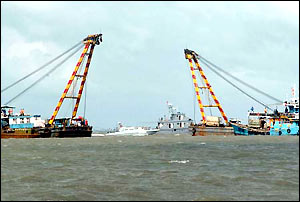
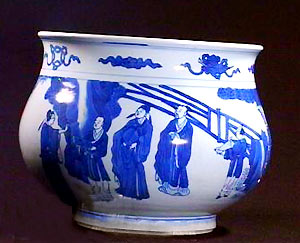
In June, local fishermen discovered the wreckage of a Qing Dynasty (1644-1911) ship in the "Bowl Reef" or Wan Jiao in Pingtan County, Fujian Province.
Archaeologists identified the wreck as having been manufactured during the reign of Emperor Kangxi (1662-1723) and named it "Bowl Reef No. 1", Wan Jiao Yi Hao.
To their surprise, the archaeological team also found rare pieces of blue and white porcelain among the wreckage, loot that could hold the key to an ancient maritime trading route.
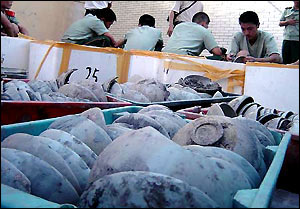
Excavation works began on September 17, conducted by research staff from the National Museum's Underwater Archaeological Research Center. Blue and white porcelain bowls and plates, and pieces of ceramics were found. Experts identified them as everyday products most likely made in the middle of the Qing Dynasty. Preliminary studies also revealed that these products were bound for export, destination as yet unknown.
Excitement and puzzlement grew on Tuesday as more porcelain products were added to the haul.
One small plate decorated with plum blossoms especially caught the attention of the researchers. On its underside is inscribed the words Shuang Long, or "double dragons", in simplified Chinese characters. As simplified Chinese characters were adopted in printing and writing only after 1949 and the two simplified Chinese were unlikely to be any discernible pattern, experts regard this as a mystery. They can only be sure of the fact that the plate was produced more than 300 years ago during the reign of Emperor Kangxi.
Experts also found the pattern on another porcelain product difficult to explain. The pattern, which depicts a hunting scene, includes a man riding a horse. Experts were able to say the man is a Chitan because of his distinctive hairstyle. The Chitan people are an ethnic group that dominated much of Manchuria during the Chitan or Liao Dynasty (916 - 1125). According to Chen Huasha, a researcher of the Palace Museum, this is the first time that a Chitan figure has been found on blue and white porcelain.
The scene also has as a woman dressed in ethnic Han costume and holding a falcon on a calico horse. Experts say it is possible that the woman riding on the horse could be Wang Zhaojun, one of the Four Beauties in Chinese history. Wang, an insignificant member of Emperor Yuan's imperial harem, was given to the Hun Chanyu Huhanye who visited the Han Dynasty ruler in 33 BC to pay homage and to ask for a Han princess to take as his wife. Chanyu Huhanye was the ruler of the Hun, a nomadic tribe that was constantly at war with Han rulers during China's Warring States Period.
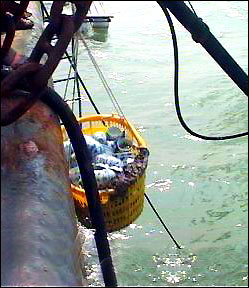
The site where the wreck was found is also of particular interest to researchers. They have yet to decide what the relation is between Bowl Reef and the ancient maritime "Silk Road", if at all.
There are other experts who hope to draw a clear maritime trading route in reference to other wreckage sites that have been found in Guangdong and Fujian Provinces.
The maritime trading route experts talk about first came about during the Qin (221-206 BC) and Han (206 BC-AD220) dynasties. In its heyday during the Tang (618-907) and Song (960-1279) dynasties, merchant ships set off from Guangdong and Fujian provinces carrying Chinese silk, tea, porcelain and lacquer products via the South China Sea, the Indian Ocean, across Southeast Asia and even traversing past Africa en route to Europe. Recorded shipwrecks along this route exceed 100.
But details of the route remain a mystery. All experts know is that Quanzhou and Fuzhou in Fujian Province were important ports of call for merchant ships plying the route.
Experts hope that the porcelain found on Bowl Reef No.1 and other relics will help them to solve this mystery.
____
www.dofundodomar.blogspot.com
China.org
September 23, 2005
In June, local fishermen discovered the wreckage of a Qing Dynasty (1644-1911) ship in the "Bowl Reef" or Wan Jiao in Pingtan County, Fujian Province.
Archaeologists identified the wreck as having been manufactured during the reign of Emperor Kangxi (1662-1723) and named it "Bowl Reef No. 1", Wan Jiao Yi Hao.
To their surprise, the archaeological team also found rare pieces of blue and white porcelain among the wreckage, loot that could hold the key to an ancient maritime trading route.
Excavation works began on September 17, conducted by research staff from the National Museum's Underwater Archaeological Research Center. Blue and white porcelain bowls and plates, and pieces of ceramics were found. Experts identified them as everyday products most likely made in the middle of the Qing Dynasty. Preliminary studies also revealed that these products were bound for export, destination as yet unknown.
Excitement and puzzlement grew on Tuesday as more porcelain products were added to the haul.
One small plate decorated with plum blossoms especially caught the attention of the researchers. On its underside is inscribed the words Shuang Long, or "double dragons", in simplified Chinese characters. As simplified Chinese characters were adopted in printing and writing only after 1949 and the two simplified Chinese were unlikely to be any discernible pattern, experts regard this as a mystery. They can only be sure of the fact that the plate was produced more than 300 years ago during the reign of Emperor Kangxi.
Experts also found the pattern on another porcelain product difficult to explain. The pattern, which depicts a hunting scene, includes a man riding a horse. Experts were able to say the man is a Chitan because of his distinctive hairstyle. The Chitan people are an ethnic group that dominated much of Manchuria during the Chitan or Liao Dynasty (916 - 1125). According to Chen Huasha, a researcher of the Palace Museum, this is the first time that a Chitan figure has been found on blue and white porcelain.
The scene also has as a woman dressed in ethnic Han costume and holding a falcon on a calico horse. Experts say it is possible that the woman riding on the horse could be Wang Zhaojun, one of the Four Beauties in Chinese history. Wang, an insignificant member of Emperor Yuan's imperial harem, was given to the Hun Chanyu Huhanye who visited the Han Dynasty ruler in 33 BC to pay homage and to ask for a Han princess to take as his wife. Chanyu Huhanye was the ruler of the Hun, a nomadic tribe that was constantly at war with Han rulers during China's Warring States Period.
The site where the wreck was found is also of particular interest to researchers. They have yet to decide what the relation is between Bowl Reef and the ancient maritime "Silk Road", if at all.
There are other experts who hope to draw a clear maritime trading route in reference to other wreckage sites that have been found in Guangdong and Fujian Provinces.
The maritime trading route experts talk about first came about during the Qin (221-206 BC) and Han (206 BC-AD220) dynasties. In its heyday during the Tang (618-907) and Song (960-1279) dynasties, merchant ships set off from Guangdong and Fujian provinces carrying Chinese silk, tea, porcelain and lacquer products via the South China Sea, the Indian Ocean, across Southeast Asia and even traversing past Africa en route to Europe. Recorded shipwrecks along this route exceed 100.
But details of the route remain a mystery. All experts know is that Quanzhou and Fuzhou in Fujian Province were important ports of call for merchant ships plying the route.
Experts hope that the porcelain found on Bowl Reef No.1 and other relics will help them to solve this mystery.
____
www.dofundodomar.blogspot.com
Nautilus museum gives glimpse into submarine history
_________________________________________________________________
Norwich Bulletin
By Carol Phelps
September 22, 2005
The state of Connecticut has many symbols. Among theses symbols are State Hero Nathan Hale, State Heroine Prudence Crandall, and Leo Connellan, the State Poet Laureate. The State Ship is the USS Nautilus (SSN-571), which was the world's first nuclear powered submarine. It is also a National Historic Landmark and is permanently situated next to the Submarine Force Library and Museum in Groton.
The sub was built at Electric Boat Division, General Dynamics Corporation in Groton, Ct.
Her keel was laid in 1952, and she was launched and commissioned in 1954.
The Nautilus is credited with breaking many records. Upon leaving the dock at Groton, Ct., she made the longest submerged journey in history to Puerto Rico. She was also the first ship to reach the North Pole.
In 1980 the Nautilus was decommissioned and converted to a floating museum on the Thames River neighboring the submarine base in Groton. The base was the first military submarine facility in 1915, and thanks to the recent efforts of the state and local supporters, the submarine base will continue to stay open.
Six ships of the United States Navy have been named USS Nautilus. The name is derived from a Greek word which means sailor or ship.
The first Nautilus was a schooner that served in the War of 1812, the second was another schooner that served in the Mexican-American War, the third served in World War I. The fourth Nautilus was a Patrol Boat commissioned in 1917. The fifth,(SS-168 was one of the largest submarines ever built for the Navy during World War II. And of course the sixth was the (SSN-571), the first nuclear powered submarine in the world.
Over the century, the submarine has changed its form many times.
A bell like structure called Bushnell's turtle, was built in 1777 in West Saybrook. It appeared to defy any kind of buoyancy. It was used in the Revolutionary War to destroy British ships and was the first submersible ever used in military conflict. A cutaway model of it is on display at the museum.
A large submarine hangs from the ceiling of the museum giving an inside look of its compartments. There are two mini theaters to view films of submarines past and present.
Visitors can look through operating periscopes and on occasion see a submarine going by on the river.
The Nautilus is open to the public. You can walk through selected spaces and peek in through glass enclosed sleeping quarters, kitchen, dining area and control room.
You'll get a feel for what it must have been like to be in close quarters during long voyages under the sea. In contrast, today's submarines are cities beneath the sea and a forceful deterrent to any would be enemy.
People are fascinated with submarines and a visit to the museum will answer some of its mysteries.
Admission to the museum is free. It is handicapped accessible. A unique gift shop offers a variety of nautical items.
For more information, call 1-800-343-0079 or visit the web at www.ussnautilus.org.living@norwichbulletin.com.
____
www.dofundodomar.blogspot.com
Norwich Bulletin
By Carol Phelps
September 22, 2005
The state of Connecticut has many symbols. Among theses symbols are State Hero Nathan Hale, State Heroine Prudence Crandall, and Leo Connellan, the State Poet Laureate. The State Ship is the USS Nautilus (SSN-571), which was the world's first nuclear powered submarine. It is also a National Historic Landmark and is permanently situated next to the Submarine Force Library and Museum in Groton.
The sub was built at Electric Boat Division, General Dynamics Corporation in Groton, Ct.
Her keel was laid in 1952, and she was launched and commissioned in 1954.
The Nautilus is credited with breaking many records. Upon leaving the dock at Groton, Ct., she made the longest submerged journey in history to Puerto Rico. She was also the first ship to reach the North Pole.
In 1980 the Nautilus was decommissioned and converted to a floating museum on the Thames River neighboring the submarine base in Groton. The base was the first military submarine facility in 1915, and thanks to the recent efforts of the state and local supporters, the submarine base will continue to stay open.
Six ships of the United States Navy have been named USS Nautilus. The name is derived from a Greek word which means sailor or ship.
The first Nautilus was a schooner that served in the War of 1812, the second was another schooner that served in the Mexican-American War, the third served in World War I. The fourth Nautilus was a Patrol Boat commissioned in 1917. The fifth,(SS-168 was one of the largest submarines ever built for the Navy during World War II. And of course the sixth was the (SSN-571), the first nuclear powered submarine in the world.
Over the century, the submarine has changed its form many times.
A bell like structure called Bushnell's turtle, was built in 1777 in West Saybrook. It appeared to defy any kind of buoyancy. It was used in the Revolutionary War to destroy British ships and was the first submersible ever used in military conflict. A cutaway model of it is on display at the museum.
A large submarine hangs from the ceiling of the museum giving an inside look of its compartments. There are two mini theaters to view films of submarines past and present.
Visitors can look through operating periscopes and on occasion see a submarine going by on the river.
The Nautilus is open to the public. You can walk through selected spaces and peek in through glass enclosed sleeping quarters, kitchen, dining area and control room.
You'll get a feel for what it must have been like to be in close quarters during long voyages under the sea. In contrast, today's submarines are cities beneath the sea and a forceful deterrent to any would be enemy.
People are fascinated with submarines and a visit to the museum will answer some of its mysteries.
Admission to the museum is free. It is handicapped accessible. A unique gift shop offers a variety of nautical items.
For more information, call 1-800-343-0079 or visit the web at www.ussnautilus.org.living@norwichbulletin.com.
____
www.dofundodomar.blogspot.com
Saturday, September 24, 2005
Mary Rose fragments to be raised
_________________________________________________________________
BBC
September 21, 2005

Sections of the bow and anchor of the Tudor warship Mary Rose are to be raised to the surface next month, it was announced on Wednesday.
The fragments of Henry VIII's flagship, which sank in 1545, were found in 2003 in the Solent.
The vast majority of the hull was raised in 1982 but the bow section remained in the silt off Portsmouth.
The raising of the bow and the anchor will improve the understanding of the main part of the ship.
It is hoped the sections will be raised by divers on 11 October, the anniversary of the recovery of the hull 23 years ago.
The dive is being financed by the Ministry of Defence, which has investigated the site as part of a proposal to widen the channel into Portsmouth Harbour for the new larger aircraft carriers.
Although the widening will not affect the Mary Rose site, timbers have been left exposed by previous dives.
John Lippiet, chief executive of the Mary Rose Trust, said: "It will be an exceptionally important dive for the Mary Rose, and the recovery of two vulnerable items from the seabed, the stem timber and the anchor, will mean that we can rebury the remaining timbers to keep them safe.
"Future generations will no doubt return for further excavations, but the site will be well protected.
"The stem is of huge significance and will help historians, archaeologists and our many visitors to have a far greater understanding of the Mary Rose as a ship."
____
www.dofundodomar.blogspot.com
BBC
September 21, 2005
Sections of the bow and anchor of the Tudor warship Mary Rose are to be raised to the surface next month, it was announced on Wednesday.
The fragments of Henry VIII's flagship, which sank in 1545, were found in 2003 in the Solent.
The vast majority of the hull was raised in 1982 but the bow section remained in the silt off Portsmouth.
The raising of the bow and the anchor will improve the understanding of the main part of the ship.
It is hoped the sections will be raised by divers on 11 October, the anniversary of the recovery of the hull 23 years ago.
The dive is being financed by the Ministry of Defence, which has investigated the site as part of a proposal to widen the channel into Portsmouth Harbour for the new larger aircraft carriers.
Although the widening will not affect the Mary Rose site, timbers have been left exposed by previous dives.
John Lippiet, chief executive of the Mary Rose Trust, said: "It will be an exceptionally important dive for the Mary Rose, and the recovery of two vulnerable items from the seabed, the stem timber and the anchor, will mean that we can rebury the remaining timbers to keep them safe.
"Future generations will no doubt return for further excavations, but the site will be well protected.
"The stem is of huge significance and will help historians, archaeologists and our many visitors to have a far greater understanding of the Mary Rose as a ship."
____
www.dofundodomar.blogspot.com
Hunt for Civil War-Era Sub Continues
_________________________________________________________________
npr
By Nell Boyce
September 21, 2005

During the Civil War, when soldiers were shooting primitive muskets, the United States Navy was building its very first submarine: The USS Alligator.
The 50-foot iron tube looked like something right out of Jules Verne. It was so small that crew members had to crouch inside; the propeller was turned by hand.
The Alligator was meant to be Abraham Lincoln's secret weapon against the Confederacy's dangerous new ironclads: It would sneak under enemy ships so that a diver could plant explosives. But the Alligator never saw combat. She was lost in bad weather in 1863, while being towed south to attack the port at Charleston, S.C.
An Office of Naval Research ship is exploring waters off the coast of Oakracoke, N.C., an area flagged by experts who used historical documents and computer models to recreate the Alligator's path.
Michael Overfield of NOAA, who is coordinating the search, is aware of the odds against finding the small sub, particularly with new complications from Tropical Storm Ophelia. But, he says, "I don't give up easy."
____
www.dofundodomar.blogspot.com
npr
By Nell Boyce
September 21, 2005
During the Civil War, when soldiers were shooting primitive muskets, the United States Navy was building its very first submarine: The USS Alligator.
The 50-foot iron tube looked like something right out of Jules Verne. It was so small that crew members had to crouch inside; the propeller was turned by hand.
The Alligator was meant to be Abraham Lincoln's secret weapon against the Confederacy's dangerous new ironclads: It would sneak under enemy ships so that a diver could plant explosives. But the Alligator never saw combat. She was lost in bad weather in 1863, while being towed south to attack the port at Charleston, S.C.
An Office of Naval Research ship is exploring waters off the coast of Oakracoke, N.C., an area flagged by experts who used historical documents and computer models to recreate the Alligator's path.
Michael Overfield of NOAA, who is coordinating the search, is aware of the odds against finding the small sub, particularly with new complications from Tropical Storm Ophelia. But, he says, "I don't give up easy."
____
www.dofundodomar.blogspot.com
Rita delays arrival of old warship in Evansville
_________________________________________________________________
Indiana News
September 23, 2005
EVANSVILLE, IND. -- The projected path of Hurricane Rita toward the Gulf Coast has disrupted plans for sailing a World War II-era warship to its new home along the Ohio River.
Officials had hoped that the LST 325 would be in place in Evansville by Oct. 1.
But Capt. Bob Jornlin and officers aboard the ship scrapped their planned Thursday departure from Mobile Bay, Ala., as Hurricane Rita turn north, making an eight-foot storm surge possible in the New Orleans area.
"It would have been crazy for us to go out there, under the circumstances," Jornlin said after conferring with U.S. Coast Guard and Army Corps of Engineers officials Thursday in New Orleans.
Work has continued on the nearly $3 million project of building a new Ohio River dock where the ship will be moored as part of a World War II museum. A total of 167 similar vessels, which carried troops, vehicles and other equipment directly to shore, were built at the Evansville Shipyard during 1942-45.
Rita appeared to be headed for landfall somewhere between Port Arthur, Texas, and Lake Charles, La., nearer LST's intended course, the captain said.
He said it was unlikely the ship would be on the Ohio by Oct. 1, but could sail in time to allow veterans attending a convention of those who served aboard the USS Oriskany to tour the vessel by Oct. 3.
LST 325 is scheduled to sail through New Orleans' industrial canal to the Mississippi River _ a route 12 hours shorter and farther from Rita's path than entering the river directly from the Gulf of Mexico.
Coast Guard and Corps of Engineers officials expressed fears that rainfall Thursday or a later storm surge could break dikes at New Orleans, Jornlin said. That would likely knock out electrical power and make it impossible to open canal locks, they told him.
Evansville Visitors and Convention Bureau's Marilee Fowler said safety was most important.
"It's up to Mother Nature how this will play out," she said. "The important thing is the captain and crew and the ship are safe. We want them here, but we want them here in one piece."
____
www.dofundodomar.blogspot.com
Indiana News
September 23, 2005
EVANSVILLE, IND. -- The projected path of Hurricane Rita toward the Gulf Coast has disrupted plans for sailing a World War II-era warship to its new home along the Ohio River.
Officials had hoped that the LST 325 would be in place in Evansville by Oct. 1.
But Capt. Bob Jornlin and officers aboard the ship scrapped their planned Thursday departure from Mobile Bay, Ala., as Hurricane Rita turn north, making an eight-foot storm surge possible in the New Orleans area.
"It would have been crazy for us to go out there, under the circumstances," Jornlin said after conferring with U.S. Coast Guard and Army Corps of Engineers officials Thursday in New Orleans.
Work has continued on the nearly $3 million project of building a new Ohio River dock where the ship will be moored as part of a World War II museum. A total of 167 similar vessels, which carried troops, vehicles and other equipment directly to shore, were built at the Evansville Shipyard during 1942-45.
Rita appeared to be headed for landfall somewhere between Port Arthur, Texas, and Lake Charles, La., nearer LST's intended course, the captain said.
He said it was unlikely the ship would be on the Ohio by Oct. 1, but could sail in time to allow veterans attending a convention of those who served aboard the USS Oriskany to tour the vessel by Oct. 3.
LST 325 is scheduled to sail through New Orleans' industrial canal to the Mississippi River _ a route 12 hours shorter and farther from Rita's path than entering the river directly from the Gulf of Mexico.
Coast Guard and Corps of Engineers officials expressed fears that rainfall Thursday or a later storm surge could break dikes at New Orleans, Jornlin said. That would likely knock out electrical power and make it impossible to open canal locks, they told him.
Evansville Visitors and Convention Bureau's Marilee Fowler said safety was most important.
"It's up to Mother Nature how this will play out," she said. "The important thing is the captain and crew and the ship are safe. We want them here, but we want them here in one piece."
____
www.dofundodomar.blogspot.com
Friday, September 23, 2005
Great Lakes Shipwreck Museum received grant for new exhibit
_________________________________________________________________
Sootoday.com
By David Helwig
September 20, 2005
WASHINGTON - The Great Lakes Shipwreck Museum received a grant from the Institute of Museum and Library Services (IMLS) to fund the completion of a maritime museum Surfboat House Exhibit describing the story of the United States Life-Saving Service.
Congressman Bart Stupak (D-Menominee) announced the $24,790 grant."
As much as we value our Great Lakes as the nation's greatest natural resource, we also must value and preserve the history," Stupak said. "This new exhibit will show how the Life-Saving boats did so much to protect sailors on the sometimes treacherous Lakes and seaways."
The museum opened the new exhibit in the 1923 U.S. Coast Guard Surfboat House on the site.
This building is the original structure used by the U.S. Coast Guard Rescue Station at Whitefish Point between 1923 and 1951, to launch hand-pulled surfboats, manned by Coast Guard crews, to come to the aid of vessels in distress on Lake Superior's Shipwreck Coast.
The funding will pay for exhibits that tell the dramatic story of the Coast Guard, and of its predecessor U.S. Life-Saving Service on this dangerous shoreline.
The men and women of the Life-Saving Service were known as the "Storm Warriors." whose motto was, "You have to go out, but you don't have to come back."
This funding is matched by a grant from Michigan Humanities Council and private donors.
IMLS funding will pay for a full-size mannequin for the exhibit; exhibit cases and case covers, also known as vitrines; video presentation equipment showing historic footage of Life-Saving personnel in action; and other associated exhibition expenses.
The exhibit already features a replica 26-foot Beebe-McClellan Surfboat, complete with mast, oars, ready to launch; and a replica Beach Cart, used by the Life-Saving Service to carry equipment to the site of a shipwreck.
The Surfboat is supported by a grant from the TEA-21 program of Michigan Department of Transportation, and the Beach Cart through a private donor.
"I would like to thank Congressman Stupak and his staff for assisting the Great Lakes Shipwreck Historical Society in securing this very important IMLS grant," said Tom Farnquist, Executive Director of the Great Lakes Shipwreck Museum.
"This funding will help pay for fabrication and installation of interpretive exhibits that tell the exciting story of life saving efforts performed by the U.S. Life Saving Service and Coast Guard.
The many thousands of visitors who travel to Whitefish Point each year will now be able to learn of the heroic rescues, hardship and loneliness surfmen and their families shared while manning the desolate stations along "Lake Superior's Shipwreck Coast."
The Great Lakes Shipwreck Museum is owned and operated by the Great Lakes Shipwreck Historical Society.
The museum remains open every day, 10 a.m. to 6 p.m., through October 31.
A special one-day event is offered annually on November 10 in remembrance of the loss of the famous steamer Edmund Fitzgerald.
For more information, please call toll-free, 800-635-1742.
____
www.dofundodomar.blogspot.com
Sootoday.com
By David Helwig
September 20, 2005
WASHINGTON - The Great Lakes Shipwreck Museum received a grant from the Institute of Museum and Library Services (IMLS) to fund the completion of a maritime museum Surfboat House Exhibit describing the story of the United States Life-Saving Service.
Congressman Bart Stupak (D-Menominee) announced the $24,790 grant."
As much as we value our Great Lakes as the nation's greatest natural resource, we also must value and preserve the history," Stupak said. "This new exhibit will show how the Life-Saving boats did so much to protect sailors on the sometimes treacherous Lakes and seaways."
The museum opened the new exhibit in the 1923 U.S. Coast Guard Surfboat House on the site.
This building is the original structure used by the U.S. Coast Guard Rescue Station at Whitefish Point between 1923 and 1951, to launch hand-pulled surfboats, manned by Coast Guard crews, to come to the aid of vessels in distress on Lake Superior's Shipwreck Coast.
The funding will pay for exhibits that tell the dramatic story of the Coast Guard, and of its predecessor U.S. Life-Saving Service on this dangerous shoreline.
The men and women of the Life-Saving Service were known as the "Storm Warriors." whose motto was, "You have to go out, but you don't have to come back."
This funding is matched by a grant from Michigan Humanities Council and private donors.
IMLS funding will pay for a full-size mannequin for the exhibit; exhibit cases and case covers, also known as vitrines; video presentation equipment showing historic footage of Life-Saving personnel in action; and other associated exhibition expenses.
The exhibit already features a replica 26-foot Beebe-McClellan Surfboat, complete with mast, oars, ready to launch; and a replica Beach Cart, used by the Life-Saving Service to carry equipment to the site of a shipwreck.
The Surfboat is supported by a grant from the TEA-21 program of Michigan Department of Transportation, and the Beach Cart through a private donor.
"I would like to thank Congressman Stupak and his staff for assisting the Great Lakes Shipwreck Historical Society in securing this very important IMLS grant," said Tom Farnquist, Executive Director of the Great Lakes Shipwreck Museum.
"This funding will help pay for fabrication and installation of interpretive exhibits that tell the exciting story of life saving efforts performed by the U.S. Life Saving Service and Coast Guard.
The many thousands of visitors who travel to Whitefish Point each year will now be able to learn of the heroic rescues, hardship and loneliness surfmen and their families shared while manning the desolate stations along "Lake Superior's Shipwreck Coast."
The Great Lakes Shipwreck Museum is owned and operated by the Great Lakes Shipwreck Historical Society.
The museum remains open every day, 10 a.m. to 6 p.m., through October 31.
A special one-day event is offered annually on November 10 in remembrance of the loss of the famous steamer Edmund Fitzgerald.
For more information, please call toll-free, 800-635-1742.
____
www.dofundodomar.blogspot.com
Séculos submersos
_________________________________________________________________
Aventuras na História
By Andressa Rovani
Arqueólogos começam este mês a mapear os mais importantes naufrágios das águas brasileiras.
Eram 4h20 da madrugada de 6 de março de 1916 quando um relâmpago mostrou ao comandante José Lotina, do transatlântico Príncipe das Astúrias, que um rochedo estava próximo demais para um choque ser evitado. Ao som de marchinhas de carnaval tocadas por sua orquestra, o chamado "Titanic brasileiro", de 150 metros de comprimento, naufragou em menos de cinco minutos, levando junto mais de 500 passageiros. No fundo do mar de Ilhabela (SP), ele se tornaria a prova do mais mortífero naufrágio brasileiro.
Estima-se que entre 4 e 11 mil naufrágios ocorreram na costa e nos rios do Brasil desde que uma das naus da comitiva de Américo Vespúcio se desgarrou da frota e afundou em nossas águas, em 1503, inaugurando esse tipo de tragédia por aqui. Entre as embarcações, há tanto galeões espanhóis como navios de imigrantes europeus, ou submarinos alemães da Segunda Guerra Mundial.
Em busca desse tesouro de ferrugem estão piratas modernos e pesquisadores interessados no valor histórico das relíquias. O Centro de Estudos de Arqueologia Náutica e Subaquática (Ceans), da Universidade de Campinas, começa este mês um trabalho que não deve durar menos de cinco anos: mapear os naufrágios já descobertos no país. O inventário vai começar em Recife, conhecida como a capital dos naufrágios. "A idéia é criar mecanismos de proteção do patrimônio subaquático", diz Gilson Rambelli, diretor do Ceans e autor do livro Arqueologia até Debaixo D'Água.
Objetivos menos nobres também rondam o passado submerso no Brasil. Hoje, quem descobre um naufrágio pode ficar com 40% a 70% do que for encontrado. Em vez de baús cheios de ouro, os exploradores procuram objetos como âncoras, porcelanas e talheres, bens culturais de enorme valor. "Muitas vezes, o melhor e o mais importante do ponto de vista histórico fica com as empresas que patrocinam as expedições, desmantelando trabalhos arqueológicos relevantes", afirma Rambelli.
OS PRINCIPAIS NAUFRÁGIOS DO BRASIL
Quinhentos anos de história embaixo d'água
1- Nau Santa Rosa, Cabo de Santo Agostinho (PE), 1726
Um dos navios naufragados mais procurados no mundo, a nau Santa Rosa foi misteriosamente incenciada em alto-mar, afundando em 22 novembro de 1726 no litoral pernambucano. Levava a Portugal o Quinto (a porção de ouro das minas que pertencia à Coroa portuguesa), além de milhares de rolos de tabaco, caixas de açúcar (uma fortuna na época), couro, arcas de jacarandá e pedras semipreciosas.
2- Galeão Sacramento, Baía de Todos os Santos (BA), 1668
O galeão Santíssimo Sacramento naufragou quase na terra firme de Salvador, em maio de 1668. Ele escoltava uma frota de 50 barcos mercantes da Companhia Geral do Comércio do Brasil, incumbidos de trazer de Lisboa João Corrêa da Silva, que assumiria o governo da Bahia. O galeão afundou depois de chocar-se com um banco de areia. Foi a segunda maior tragédia marítima brasileira, com 400 mortos.
3- Princesa Mafalda, Abrolhos (BA), 1927
Rumo ao Brasil e à Argentina, 1.261 imigrantes italianos, iugoslavos, espanhóis e austríacos se espremiam no navio. Às 17h20 do dia 25 de outubro, todos sofreram o mesmo pavor: a água inundava o navio. Aglomerados na proa, os que restavam na embarcação viram seus colegas de viagem serem devorados por tubarões. Graças ao resgate rápido feito por outros navios, o número de mortos ficou em 314.
4- Fragata H.M.S. Thetis, Cabo Frio (RJ), 1830
Em 1810, o Tratado de Comércio e Navegação assinado por Inglaterra e Portugal aumentou as exportações inglesas para o Brasil. Um dos navios que traziam tecidos, ferramentas e farinha e voltavam com o pagamento, a fragata Thetis chocou-se com rochas, provocando a morte de 29 dos 300 tripulantes. A recuperação das barras de ouro e prata foi a primeira grande operação de resgate de tesouros no país.
5- Príncipe das Astúrias, Ilhabela (SP), 1916
O transatlântico afundou quando passava pelo Brasil rumo a Buenos Aires. Foi o maior desastre em águas brasileiras. Oficialmente iam a bordo 578 pessoas - mas havia centenas de clandestinos apinhados no porão. O Astúrias levava ouro e, no convés, 12 estátuas de bronze para um monumento, em Buenos Aires. O resgate dessas riquezas, feito com explosivos, destruiu parte do navio.
6- Submarino U-Boat 513, Ilha de Sta. Catarina (SC), 1943
O poderoso U-boat 513 (de "unterseeboot", submarino em alemão) era um dos 20 que faziam parte da ofensiva do Alto Comando alemão para impedir o apoio da América Latina aos Estados Unidos, durante a Segunda Guerra. Na tarde do dia 19 de julho de 1943, uma de suas conversas por rádio foi interceptada. Identificado, foi atacado por um avião americano, naufragando em segundos com 46 tripulantes.
____
www.dofundodomar.blogspot.com
Aventuras na História
By Andressa Rovani
Arqueólogos começam este mês a mapear os mais importantes naufrágios das águas brasileiras.
Eram 4h20 da madrugada de 6 de março de 1916 quando um relâmpago mostrou ao comandante José Lotina, do transatlântico Príncipe das Astúrias, que um rochedo estava próximo demais para um choque ser evitado. Ao som de marchinhas de carnaval tocadas por sua orquestra, o chamado "Titanic brasileiro", de 150 metros de comprimento, naufragou em menos de cinco minutos, levando junto mais de 500 passageiros. No fundo do mar de Ilhabela (SP), ele se tornaria a prova do mais mortífero naufrágio brasileiro.
Estima-se que entre 4 e 11 mil naufrágios ocorreram na costa e nos rios do Brasil desde que uma das naus da comitiva de Américo Vespúcio se desgarrou da frota e afundou em nossas águas, em 1503, inaugurando esse tipo de tragédia por aqui. Entre as embarcações, há tanto galeões espanhóis como navios de imigrantes europeus, ou submarinos alemães da Segunda Guerra Mundial.
Em busca desse tesouro de ferrugem estão piratas modernos e pesquisadores interessados no valor histórico das relíquias. O Centro de Estudos de Arqueologia Náutica e Subaquática (Ceans), da Universidade de Campinas, começa este mês um trabalho que não deve durar menos de cinco anos: mapear os naufrágios já descobertos no país. O inventário vai começar em Recife, conhecida como a capital dos naufrágios. "A idéia é criar mecanismos de proteção do patrimônio subaquático", diz Gilson Rambelli, diretor do Ceans e autor do livro Arqueologia até Debaixo D'Água.
Objetivos menos nobres também rondam o passado submerso no Brasil. Hoje, quem descobre um naufrágio pode ficar com 40% a 70% do que for encontrado. Em vez de baús cheios de ouro, os exploradores procuram objetos como âncoras, porcelanas e talheres, bens culturais de enorme valor. "Muitas vezes, o melhor e o mais importante do ponto de vista histórico fica com as empresas que patrocinam as expedições, desmantelando trabalhos arqueológicos relevantes", afirma Rambelli.
OS PRINCIPAIS NAUFRÁGIOS DO BRASIL
Quinhentos anos de história embaixo d'água
1- Nau Santa Rosa, Cabo de Santo Agostinho (PE), 1726
Um dos navios naufragados mais procurados no mundo, a nau Santa Rosa foi misteriosamente incenciada em alto-mar, afundando em 22 novembro de 1726 no litoral pernambucano. Levava a Portugal o Quinto (a porção de ouro das minas que pertencia à Coroa portuguesa), além de milhares de rolos de tabaco, caixas de açúcar (uma fortuna na época), couro, arcas de jacarandá e pedras semipreciosas.
2- Galeão Sacramento, Baía de Todos os Santos (BA), 1668
O galeão Santíssimo Sacramento naufragou quase na terra firme de Salvador, em maio de 1668. Ele escoltava uma frota de 50 barcos mercantes da Companhia Geral do Comércio do Brasil, incumbidos de trazer de Lisboa João Corrêa da Silva, que assumiria o governo da Bahia. O galeão afundou depois de chocar-se com um banco de areia. Foi a segunda maior tragédia marítima brasileira, com 400 mortos.
3- Princesa Mafalda, Abrolhos (BA), 1927
Rumo ao Brasil e à Argentina, 1.261 imigrantes italianos, iugoslavos, espanhóis e austríacos se espremiam no navio. Às 17h20 do dia 25 de outubro, todos sofreram o mesmo pavor: a água inundava o navio. Aglomerados na proa, os que restavam na embarcação viram seus colegas de viagem serem devorados por tubarões. Graças ao resgate rápido feito por outros navios, o número de mortos ficou em 314.
4- Fragata H.M.S. Thetis, Cabo Frio (RJ), 1830
Em 1810, o Tratado de Comércio e Navegação assinado por Inglaterra e Portugal aumentou as exportações inglesas para o Brasil. Um dos navios que traziam tecidos, ferramentas e farinha e voltavam com o pagamento, a fragata Thetis chocou-se com rochas, provocando a morte de 29 dos 300 tripulantes. A recuperação das barras de ouro e prata foi a primeira grande operação de resgate de tesouros no país.
5- Príncipe das Astúrias, Ilhabela (SP), 1916
O transatlântico afundou quando passava pelo Brasil rumo a Buenos Aires. Foi o maior desastre em águas brasileiras. Oficialmente iam a bordo 578 pessoas - mas havia centenas de clandestinos apinhados no porão. O Astúrias levava ouro e, no convés, 12 estátuas de bronze para um monumento, em Buenos Aires. O resgate dessas riquezas, feito com explosivos, destruiu parte do navio.
6- Submarino U-Boat 513, Ilha de Sta. Catarina (SC), 1943
O poderoso U-boat 513 (de "unterseeboot", submarino em alemão) era um dos 20 que faziam parte da ofensiva do Alto Comando alemão para impedir o apoio da América Latina aos Estados Unidos, durante a Segunda Guerra. Na tarde do dia 19 de julho de 1943, uma de suas conversas por rádio foi interceptada. Identificado, foi atacado por um avião americano, naufragando em segundos com 46 tripulantes.
____
www.dofundodomar.blogspot.com
North American Shipwreck & Dive Show
_________________________________________________________________
North American Shipwreck & Dive Show™ March 11, 2006 - West Bloomfield, Michigan
Diving, Exploration and Discovery
The North American Shipwreck & Dive Show is the premier exposition of scuba diving, shipwreck exploration and dive travel in the Great Lakes region.
We feature compelling presentations on the latest shipwreck discoveries in the Great Lakes, accounts of diving expeditions around the world, information on the latest scuba gear and underwater photographic equipment, and dive travel to locations everywhere.
Our exhibition halls display everything from the newest scuba equipment to artifacts from the oldest shipwrecks in the Great Lakes.
Recreational and technical divers from every level of training meet with each other and with dive industry professionals in an atmosphere of fun and creativity.
Free Exhibitions
Visit our Exhibit Hall and see it all for free! Our Exhibit Hall has everything in the world of scuba diving and underwater exploration. Scuba diving equipment, underwater cameras, diver propulsion vehicles, travel information, rescue and recovery teams, maritime museums, dive shops and boat charters – see it all and see it for free!
Want to see the whole wreck on one dive? Want to cover a mile of reef on a single tank? Think about an underwater scooter! In-water demos and product demonstrations.
Isn't it time to upgrade your scuba gear? See the latest in scuba diving technology and underwater exploration equipment. In-water demonstrations and hands-on displays.
Looking for new scuba diiving destinations? Meet with the industry's top dive travel professionals and plan the diving trip of your dreams.
Exciting Presentations
The 2006 Show has presentations for every diver, and for everyone interested in the maritime tradition of the Great Lakes.
We're all about sunken ships! We feature presentations on Great Lakes wrecks discovered in the 2005 diving season, and expeditions to shipwrecks in every corner of the world.
New to Scuba Diving? Try out scuba diving in a relaxed setting in our Olympic-sized pool. Sign up for a "Discover Scuba" session at the Show and see for yourself what it's all about!
Learn about underwater photography and videography from the pros! Find out how to take stunning stills and knock-out videos, even in cold water. Check out our displays of underwater photos and videos.
They're still down there! The cold fresh water of the Great Lakes preserves thousands of shipwrecks. Vessels that sank in the 1800's look as if they went down last year! Learn about our amazing underwater heritage that is unequalled anywhere in the world!
More, More, More! Recreational diving, technical diving, wreck diving, cave diving, public safety diving, equipment manufacturers, dive retailers, dive clubs, boats, charters, museums, dive medicine... see it all at the 2006 North American Shipwreck & Dive Show!
Additional information about the show, including ticket, location, exhibitor, sponsor, and media info, can be found at www.shipwreckshow.com.
____
www.dofundodomar.blogspot.com
North American Shipwreck & Dive Show™ March 11, 2006 - West Bloomfield, Michigan
Diving, Exploration and Discovery
The North American Shipwreck & Dive Show is the premier exposition of scuba diving, shipwreck exploration and dive travel in the Great Lakes region.
We feature compelling presentations on the latest shipwreck discoveries in the Great Lakes, accounts of diving expeditions around the world, information on the latest scuba gear and underwater photographic equipment, and dive travel to locations everywhere.
Our exhibition halls display everything from the newest scuba equipment to artifacts from the oldest shipwrecks in the Great Lakes.
Recreational and technical divers from every level of training meet with each other and with dive industry professionals in an atmosphere of fun and creativity.
Free Exhibitions
Visit our Exhibit Hall and see it all for free! Our Exhibit Hall has everything in the world of scuba diving and underwater exploration. Scuba diving equipment, underwater cameras, diver propulsion vehicles, travel information, rescue and recovery teams, maritime museums, dive shops and boat charters – see it all and see it for free!
Want to see the whole wreck on one dive? Want to cover a mile of reef on a single tank? Think about an underwater scooter! In-water demos and product demonstrations.
Isn't it time to upgrade your scuba gear? See the latest in scuba diving technology and underwater exploration equipment. In-water demonstrations and hands-on displays.
Looking for new scuba diiving destinations? Meet with the industry's top dive travel professionals and plan the diving trip of your dreams.
Exciting Presentations
The 2006 Show has presentations for every diver, and for everyone interested in the maritime tradition of the Great Lakes.
We're all about sunken ships! We feature presentations on Great Lakes wrecks discovered in the 2005 diving season, and expeditions to shipwrecks in every corner of the world.
New to Scuba Diving? Try out scuba diving in a relaxed setting in our Olympic-sized pool. Sign up for a "Discover Scuba" session at the Show and see for yourself what it's all about!
Learn about underwater photography and videography from the pros! Find out how to take stunning stills and knock-out videos, even in cold water. Check out our displays of underwater photos and videos.
They're still down there! The cold fresh water of the Great Lakes preserves thousands of shipwrecks. Vessels that sank in the 1800's look as if they went down last year! Learn about our amazing underwater heritage that is unequalled anywhere in the world!
More, More, More! Recreational diving, technical diving, wreck diving, cave diving, public safety diving, equipment manufacturers, dive retailers, dive clubs, boats, charters, museums, dive medicine... see it all at the 2006 North American Shipwreck & Dive Show!
Additional information about the show, including ticket, location, exhibitor, sponsor, and media info, can be found at www.shipwreckshow.com.
____
www.dofundodomar.blogspot.com
Thursday, September 22, 2005
Oil pipelines open up archaeological frontier
_________________________________________________________________
MSNBC
September 20, 2005

Researchers Marek E. Jasinski and Fredrik Søreide
examine some of the artifacts recovered from the
wreck of a 19th-century merchant ship.
Photo Fredrik Naumann / NTNU.
OSLO, Norway - Oil companies’ dash to build pipelines along the ocean floor has opened up one of the last archaeological frontiers — the deep-sea shipwreck.
A Norwegian team says it has finished the deepest excavation in marine archaeological history, lifting 500 porcelain plates, wine bottles, coins, chess pieces and navigation equipment from the wreck of a 19th-century merchant ship lying 560 feet (170 meters) below the sea surface.
And the $6.25 million bill was paid for by the oil companies developing the Ormen Lange gas field off Norway’s west coast, who found the wreck while mapping the seafloor to lay a pipeline.
“We rely on funding from the oil companies,” said Fredik Søreide of the Norwegian University of Science and Technology. “I can think of no others who would pay for it.”
The oil company consortium hired the archaeologists to investigate the site and to show them where they could build a pipeline without damaging the wreck.
Booty hunters driven by profit have dragged up gold and other valuables from shipwrecks in far deeper waters using the remote controlled technology, but archaeologists — more interested in finding artifacts for research and museum shelves — have until now been unable to fund expeditions.
Now oil companies building pipelines across ocean floors to connect ever more remote gas and oil fields to markets are stumbling across shipwrecks that need to be surveyed. And they are paying archaeologists to do so.
This is the fourth shipwreck discovered by oil firms Søreide has worked with, adding that he has already been approached about a wreck in the Gulf of Mexico next summer.
A large steel frame was placed on top of the shipwreck off Norway, allowing the archaeologists to navigate a robot around the wreck without disturbing it, delicately pulling up artifacts as it went along.
“Deep water was the last frontier for marine archaeology,” project director Marek Jasinski said.
“The new technology enables us to investigate and excavate cultural heritage in deep water with the same precision and standards as on land.”
Previously, scientists have only been able to send remotely controlled vehicles to view shipwrecks, pick objects up and take them to the surface.
____
www.dofundodomar.blogspot.com
MSNBC
September 20, 2005
Researchers Marek E. Jasinski and Fredrik Søreide
examine some of the artifacts recovered from the
wreck of a 19th-century merchant ship.
Photo Fredrik Naumann / NTNU.
OSLO, Norway - Oil companies’ dash to build pipelines along the ocean floor has opened up one of the last archaeological frontiers — the deep-sea shipwreck.
A Norwegian team says it has finished the deepest excavation in marine archaeological history, lifting 500 porcelain plates, wine bottles, coins, chess pieces and navigation equipment from the wreck of a 19th-century merchant ship lying 560 feet (170 meters) below the sea surface.
And the $6.25 million bill was paid for by the oil companies developing the Ormen Lange gas field off Norway’s west coast, who found the wreck while mapping the seafloor to lay a pipeline.
“We rely on funding from the oil companies,” said Fredik Søreide of the Norwegian University of Science and Technology. “I can think of no others who would pay for it.”
The oil company consortium hired the archaeologists to investigate the site and to show them where they could build a pipeline without damaging the wreck.
Booty hunters driven by profit have dragged up gold and other valuables from shipwrecks in far deeper waters using the remote controlled technology, but archaeologists — more interested in finding artifacts for research and museum shelves — have until now been unable to fund expeditions.
Now oil companies building pipelines across ocean floors to connect ever more remote gas and oil fields to markets are stumbling across shipwrecks that need to be surveyed. And they are paying archaeologists to do so.
This is the fourth shipwreck discovered by oil firms Søreide has worked with, adding that he has already been approached about a wreck in the Gulf of Mexico next summer.
A large steel frame was placed on top of the shipwreck off Norway, allowing the archaeologists to navigate a robot around the wreck without disturbing it, delicately pulling up artifacts as it went along.
“Deep water was the last frontier for marine archaeology,” project director Marek Jasinski said.
“The new technology enables us to investigate and excavate cultural heritage in deep water with the same precision and standards as on land.”
Previously, scientists have only been able to send remotely controlled vehicles to view shipwrecks, pick objects up and take them to the surface.
____
www.dofundodomar.blogspot.com
Ancient Roman navy soldier surfaces
_________________________________________________________________
ANSA.it
September 20, 2005

Ravenna site yields first-ever image of imperial officer
The first-ever image of a soldier in the Ancient Roman navy has surfaced at a major imperial naval base at Ravenna.
The armour-clad, weapon-bearing soldier was carved on a funeral stone, or stele, in a waterlogged necropolis at Classe (ancient Classis), the now silted-up Ravenna port area where Rome's Adriatic fleet was stationed.
Previous finds at the site have only shown people in civilian garb .An inscription on the soldier's funeral slab says he was an officer on a small, fast oar-powered ship ('liburna') used to catch pirates.
Although the stele is small - about one metre (yard) long - the detail of the carving is intricate.
The soldier has the bowl haircut and delicate, child-like features typical of carvings from the 1st-century AD Julio-Claudian era.
He wears anatomically shaped body armour with shoulder strips and a leather-fringed military skirt, above the light but tough military sandals called 'caligae' (from which the notorious emperor Caligula got his name). He is carrying a heavy javelin ('pilum') and has a short stabbing sword called 'gladius' on his decorated belt.
Over his armour there is a band which experts think could be a military decoration.
Part of the inscription is missing. The soldier's name is thought to be Monus Capito. His ship was called 'Aurata' or 'Golden' and the man who put up the stele, probably a fellow soldier, was named Cocneus .
The stele was found in three metres of water by divers helping archaeologists trace a large tunnel from late Imperial times.
The stone had been taken from the burial ground and used to prop up a part of the tunnel that had collapsed.
Experts said the find would have pride of place in a Museum of Archaeology being set up at Classe.
'Classis' in Latin means 'fleet' but was also local shorthand for the fleet's base. Rome had two Mediterranean fleets, one based at Ravenna and the other near Naples. Piracy was a major problem for Roman merchant ships and the navy frequently launched punitive expeditions against raiders from Cilicia, now southern Turkey.
In one of these, Julius Caesar caught and killed pirates who had captured and held him for ransom.
Then Pompey the Great, Caesar's one-time partner and eventual rival, smashed the Cilician pirates in a famous whirlwind campaign.
The Roman navy was an extension of the army and used army fighting methods. Ships rammed and hooked enemy vessels so that soldiers could board and attack .
____
www.dofundodomar.blogspot.com
ANSA.it
September 20, 2005
Ravenna site yields first-ever image of imperial officer
The first-ever image of a soldier in the Ancient Roman navy has surfaced at a major imperial naval base at Ravenna.
The armour-clad, weapon-bearing soldier was carved on a funeral stone, or stele, in a waterlogged necropolis at Classe (ancient Classis), the now silted-up Ravenna port area where Rome's Adriatic fleet was stationed.
Previous finds at the site have only shown people in civilian garb .An inscription on the soldier's funeral slab says he was an officer on a small, fast oar-powered ship ('liburna') used to catch pirates.
Although the stele is small - about one metre (yard) long - the detail of the carving is intricate.
The soldier has the bowl haircut and delicate, child-like features typical of carvings from the 1st-century AD Julio-Claudian era.
He wears anatomically shaped body armour with shoulder strips and a leather-fringed military skirt, above the light but tough military sandals called 'caligae' (from which the notorious emperor Caligula got his name). He is carrying a heavy javelin ('pilum') and has a short stabbing sword called 'gladius' on his decorated belt.
Over his armour there is a band which experts think could be a military decoration.
Part of the inscription is missing. The soldier's name is thought to be Monus Capito. His ship was called 'Aurata' or 'Golden' and the man who put up the stele, probably a fellow soldier, was named Cocneus .
The stele was found in three metres of water by divers helping archaeologists trace a large tunnel from late Imperial times.
The stone had been taken from the burial ground and used to prop up a part of the tunnel that had collapsed.
Experts said the find would have pride of place in a Museum of Archaeology being set up at Classe.
'Classis' in Latin means 'fleet' but was also local shorthand for the fleet's base. Rome had two Mediterranean fleets, one based at Ravenna and the other near Naples. Piracy was a major problem for Roman merchant ships and the navy frequently launched punitive expeditions against raiders from Cilicia, now southern Turkey.
In one of these, Julius Caesar caught and killed pirates who had captured and held him for ransom.
Then Pompey the Great, Caesar's one-time partner and eventual rival, smashed the Cilician pirates in a famous whirlwind campaign.
The Roman navy was an extension of the army and used army fighting methods. Ships rammed and hooked enemy vessels so that soldiers could board and attack .
____
www.dofundodomar.blogspot.com
Midget submarine mystery surfaces
_________________________________________________________________
The Sailor´s Paper
By Michael Brooke

The last of two living survivors of the sinking
of HMAS Kuttabul, Neil Roberts, 82, stands with
his grand children at the annual memorial ceremony
held to commemorate the 21 sailors who died when
Kuttabul was torpedoed by a Japanese midget sub in 1942.
A documentary currently being filmed with assistance from the Navy about the Japanese midget submarine attack on Sydney Harbour has rekindled the debate surrounding the fate of the third sub that vanished in mystery in 1942.
Historians and WWII veterans are divided on whether the third midget submarine is somewhere on the bottom of Sydney Harbour, or sank outside Sydney Heads after torpedoing HMAS Kuttabul on June 1, 1942.
The documentary, entitled ‘He’s Coming South – The Attack on Sydney Harbour’, is being filmed on location by Animax Films with assistance from the Royal Australian Navy.
The director of the documentary, Damien Lay, said he was inspired to make the documentary “because of the mystery that surrounds the disappearance of the third submarine”.
Mr Lay told Navy News that the documentary will be screened on Foxtel’s History Channel on Armistice Day and the evidence it presents suggests that “the third midget submarine could be anywhere in Sydney Harbour or outside the Heads.”
Neil Roberts, 82, a survivor of HMAS Kuttabul that was torpedoed by the missing submarine, said the mystery surrounding the missing sub would follow him to the grave.
“There are so many myths and legends about what happened to the third sub but nobody knows for sure.” — Neil Roberts However, former sailors and WWII veterans said the midget sub sank in Sydney Harbour where it is still waiting to be discovered.
Bob Parish, NSW President of the Naval Association, said “some time ago a side-scan sonar device detected what could be the missing submarine in deep water opposite Balls Head Reserve.”Mr Parish’s theory is supported by a former Japanese submariner, Sub LT Kazao Sakamaki, who said the missing sub sank in Sydney Harbour, because it did not have enough battery power to get outside Sydney Heads.
However, others say the sub made it out of Sydney Heads because oceanography and hydrographic ships and technology used to map the entire sea floor of Sydney Harbour had found nothing.
The documentary producer, Chris Berry, said Navy had helped with the documentary in a big way by providing historical advice and allowing filming on Garden Island, including the annual memorial ceremony to commemorate the 21 sailors killed in the submarine attack.
The midget subs were launched from three mother submarines off Sydney Heads and sneaked in at night, after a Japanese plane had conducted a reconnaissance flight over Sydney Harbour to spy on the Australian and US warships at berth. Each of the 24-metre midget submarines carried two men.
The first sub blew itself up after becoming entangled in the anti-submarine boom-gate near Watson’s Bay, while the second sub was scuttled by its crew after being depth charged into submission at Taylor’s Bay.
The fate of the third submarine has remained a mystery since it fired two torpedoes at the cruiser USS Chicago, which missed and instead hit HMAS Kuttabul, killing 21 men sleeping on-board.
Navy personnel and the public can get the Navy’s official version of events when the Maritime Heritage Centre opens on Garden Island in October.
One of the major exhibits will be ‘The Battle Of Sydney’ audio-visual display that will tell the story of the Japanese midget submarine attack. The conning tower of the second submarine will also be displayed at the RAN Heritage Centre that opens on October 4.”
____
www.dofundodomar.blogspot.com
The Sailor´s Paper
By Michael Brooke
The last of two living survivors of the sinking
of HMAS Kuttabul, Neil Roberts, 82, stands with
his grand children at the annual memorial ceremony
held to commemorate the 21 sailors who died when
Kuttabul was torpedoed by a Japanese midget sub in 1942.
A documentary currently being filmed with assistance from the Navy about the Japanese midget submarine attack on Sydney Harbour has rekindled the debate surrounding the fate of the third sub that vanished in mystery in 1942.
Historians and WWII veterans are divided on whether the third midget submarine is somewhere on the bottom of Sydney Harbour, or sank outside Sydney Heads after torpedoing HMAS Kuttabul on June 1, 1942.
The documentary, entitled ‘He’s Coming South – The Attack on Sydney Harbour’, is being filmed on location by Animax Films with assistance from the Royal Australian Navy.
The director of the documentary, Damien Lay, said he was inspired to make the documentary “because of the mystery that surrounds the disappearance of the third submarine”.
Mr Lay told Navy News that the documentary will be screened on Foxtel’s History Channel on Armistice Day and the evidence it presents suggests that “the third midget submarine could be anywhere in Sydney Harbour or outside the Heads.”
Neil Roberts, 82, a survivor of HMAS Kuttabul that was torpedoed by the missing submarine, said the mystery surrounding the missing sub would follow him to the grave.
“There are so many myths and legends about what happened to the third sub but nobody knows for sure.” — Neil Roberts However, former sailors and WWII veterans said the midget sub sank in Sydney Harbour where it is still waiting to be discovered.
Bob Parish, NSW President of the Naval Association, said “some time ago a side-scan sonar device detected what could be the missing submarine in deep water opposite Balls Head Reserve.”Mr Parish’s theory is supported by a former Japanese submariner, Sub LT Kazao Sakamaki, who said the missing sub sank in Sydney Harbour, because it did not have enough battery power to get outside Sydney Heads.
However, others say the sub made it out of Sydney Heads because oceanography and hydrographic ships and technology used to map the entire sea floor of Sydney Harbour had found nothing.
The documentary producer, Chris Berry, said Navy had helped with the documentary in a big way by providing historical advice and allowing filming on Garden Island, including the annual memorial ceremony to commemorate the 21 sailors killed in the submarine attack.
The midget subs were launched from three mother submarines off Sydney Heads and sneaked in at night, after a Japanese plane had conducted a reconnaissance flight over Sydney Harbour to spy on the Australian and US warships at berth. Each of the 24-metre midget submarines carried two men.
The first sub blew itself up after becoming entangled in the anti-submarine boom-gate near Watson’s Bay, while the second sub was scuttled by its crew after being depth charged into submission at Taylor’s Bay.
The fate of the third submarine has remained a mystery since it fired two torpedoes at the cruiser USS Chicago, which missed and instead hit HMAS Kuttabul, killing 21 men sleeping on-board.
Navy personnel and the public can get the Navy’s official version of events when the Maritime Heritage Centre opens on Garden Island in October.
One of the major exhibits will be ‘The Battle Of Sydney’ audio-visual display that will tell the story of the Japanese midget submarine attack. The conning tower of the second submarine will also be displayed at the RAN Heritage Centre that opens on October 4.”
____
www.dofundodomar.blogspot.com
Wednesday, September 21, 2005
The Centre for Portuguese Nautical Studies announce their second Portuguese Maritime History/Archaeology Conference
_________________________________________________________________
Second notification – September 2005 – CALL for PAPERS
The Centre for Portuguese Nautical Studies [CPNS] is proud to announce our second Portuguese Maritime History/Archaeology Conference
Following the major success of our first conference held during August 2004 we are proud to announce the second CPNS Maritime Archaeology Conference to be held in Mossel Bay, Southern Cape Province, South Africa from 6-8 August 2006.
We are inviting all interested parties to indicate their interest to attend and/or present at this major international event. Experts from across the world will join us in discussions on various aspects relating to Portuguese Maritime History & Archaeology during the Carreira da India period.
Overall Theme: Portuguese Maritime history during the Carreira da India period
Friday to Sunday: 3 Days with parallel sessions
Session1: Trade Ceramics and Trade goods
Session 2: Portuguese Maritime expansion, Trade routes, Ports of call, Historical background.
Session 3: The Portuguese ship
Session 4: Maritime Archaeology – Local and international projects, Museums, Legislation,
Discipline of Maritime Archaeology, Shipwreck and Survivor sites, Artefact
Preservation, Archaeologist vs Treasure-hunter incl. ‘commercial’ Archaeology
Session5: Portuguese Naval Artillery, Maps and Navigation
Session 6: Various hands-on workshops
Anybody interested in Presenting at the conference are asked to contact us asap and provide us with a suggested topic/s. You will be under no obligation to attend or speak but we need some input to start planning the program. You are welcome to suggest any topic relevant to Portuguese Maritime History or Archaeology during the period and also to suggest additional workshops you would be interested in attending or presenting. Already enquiries have been received from 12 different countries with many well known and respected scholars indicating their plans to attend and/or present..
Send us an e-mail confirming your interest in attending as speaker and/or delegate and we will add you to the conference mailing list for updates.
We will provide more detailed about confirmed speakers on our website as from November 2005. http://www.cpnssa.org/
Contact Information:
Paul Brandt
Director: CPNS
Tel: +27 82 9402423
Fax: +27 12 3192436
e-mail: pbrandt@medic.up.ac.za
____
www.dofundodomar.blogspot.com
Second notification – September 2005 – CALL for PAPERS
The Centre for Portuguese Nautical Studies [CPNS] is proud to announce our second Portuguese Maritime History/Archaeology Conference
Following the major success of our first conference held during August 2004 we are proud to announce the second CPNS Maritime Archaeology Conference to be held in Mossel Bay, Southern Cape Province, South Africa from 6-8 August 2006.
We are inviting all interested parties to indicate their interest to attend and/or present at this major international event. Experts from across the world will join us in discussions on various aspects relating to Portuguese Maritime History & Archaeology during the Carreira da India period.
Overall Theme: Portuguese Maritime history during the Carreira da India period
Friday to Sunday: 3 Days with parallel sessions
Session1: Trade Ceramics and Trade goods
Session 2: Portuguese Maritime expansion, Trade routes, Ports of call, Historical background.
Session 3: The Portuguese ship
Session 4: Maritime Archaeology – Local and international projects, Museums, Legislation,
Discipline of Maritime Archaeology, Shipwreck and Survivor sites, Artefact
Preservation, Archaeologist vs Treasure-hunter incl. ‘commercial’ Archaeology
Session5: Portuguese Naval Artillery, Maps and Navigation
Session 6: Various hands-on workshops
Anybody interested in Presenting at the conference are asked to contact us asap and provide us with a suggested topic/s. You will be under no obligation to attend or speak but we need some input to start planning the program. You are welcome to suggest any topic relevant to Portuguese Maritime History or Archaeology during the period and also to suggest additional workshops you would be interested in attending or presenting. Already enquiries have been received from 12 different countries with many well known and respected scholars indicating their plans to attend and/or present..
Send us an e-mail confirming your interest in attending as speaker and/or delegate and we will add you to the conference mailing list for updates.
We will provide more detailed about confirmed speakers on our website as from November 2005. http://www.cpnssa.org/
Contact Information:
Paul Brandt
Director: CPNS
Tel: +27 82 9402423
Fax: +27 12 3192436
e-mail: pbrandt@medic.up.ac.za
____
www.dofundodomar.blogspot.com
Shockwaves as shipwreck looters arrested
_________________________________________________________________
Malta Today
By Karl Schembri
September 18, 2005
Heritage chief calls for amnesty of artefact finders
An amnesty to divers who report their own findings of underwater heritage artefacts would be the next logical step for the government to effectively start preserving national heritage buried under the sea.
The call comes from experienced deep water divers and maritime heritage experts, and endorsed by the very same government agency that would be responsible for the upkeep and public exhibition of these artefacts – Heritage Malta.
Mario Tabone, the chairman of the entity entrusted with Malta’s heritage sites and museums, told MaltaToday that he agreed with a policy of granting a definite period of amnesty for whoever volunteers to present underwater artefacts to the authorities, on a similar model as adopted in the UK a couple of years ago.
“It would be a good idea,” he said. “It would boost our records of underwater treasures and our exhibits if the conscientious divers were allowed to return their artefacts without fear of being investigated.”
MaltaToday’s revelations last week of police arrests of scuba divers looting underwater artefacts has created a wave of positive reactions from the Maltese diving community, as investigators were questioning more suspects.
But divers speaking to this newspaper say the government is not investing enough in recovering, preserving and exhibiting underwater national treasures, giving a freehand to unscrupulous divers to pilfer shipwrecks and most of the seabed of its relics.
“One cannot really blame those who think they should keep these artefacts,” one shipwreck diver said. “The message they get from the government is that these finds are not that important. They feel they can appreciate them much more than the authorities.”
An amnesty coupled with a government commitment to exhibit underwater treasures for the public would definitely help boost public awareness. In the UK, a similar amnesty led thousands of divers and owners of underwater heritage artefacts came forward with previously unreported objects of historical and archaeological interest.
Tabone believes the same would happen in Malta.“I had insisted that underwater heritage finds are protected by law in the same way we protect national treasures found on the ground,” he said. “Let’s start a clean slate and give an opportunity to whoever has such items to come forward to us.”
Sources in diving circles says deep water diving is increasing in popularity around the islands, with sophisticated technology making it possible for so called technical divers to reach previously unreachable depths.
Some expert diving groups involving Maltese and foreigners who are notorious for pilfering shipwrecks were arrested in the last weeks in an unprecedented police investigation.
“They just act like cowboys,” sources said about one of the diving schools investigated.
With the long-time underwater criminal practice finally coming out in the open, bona fide divers are lauding the efforts to clamp down on scuba thieves, although foreign divers reacting to MaltaToday’s story confirmed the “cowboy” mentality reigning in some technical diving circles.
“If you won't compensate the diver for those things, then do not be surprised when the diver keeps the item for himself, or sells it to someone willing to compensate him,” one American diver of the “Underwater Explorers” community said in an e-mail. “If you're so upset that you're not getting to have or see these items ... learn to dive and go get them yourself. Then there will be nobody to have to worry about compensating.”
Derided, and deplored, by heritage experts as the underwater version of Indiana Jones, these self-appointed, unauthorised treasure hunters are making a lucrative worldwide business out of the retrieval of artefacts from shipwrecks, despite international heritage conventions and divers’ codes of conducts advocating a “look, don’t touch” approach.
A Maltese diving instructor said: “Technical divers are a great resource of knowledge of what’s hidden under the sea, so one shouldn’t just condemn pilfering without engaging the serious majority who can help monitor these sites in collaboration with the government. It would be short-sighted to focus just on prosecution while heritage authorities keep neglecting these treasures.”
____
www.dofundodomar.blogspot.com
Malta Today
By Karl Schembri
September 18, 2005
Heritage chief calls for amnesty of artefact finders
An amnesty to divers who report their own findings of underwater heritage artefacts would be the next logical step for the government to effectively start preserving national heritage buried under the sea.
The call comes from experienced deep water divers and maritime heritage experts, and endorsed by the very same government agency that would be responsible for the upkeep and public exhibition of these artefacts – Heritage Malta.
Mario Tabone, the chairman of the entity entrusted with Malta’s heritage sites and museums, told MaltaToday that he agreed with a policy of granting a definite period of amnesty for whoever volunteers to present underwater artefacts to the authorities, on a similar model as adopted in the UK a couple of years ago.
“It would be a good idea,” he said. “It would boost our records of underwater treasures and our exhibits if the conscientious divers were allowed to return their artefacts without fear of being investigated.”
MaltaToday’s revelations last week of police arrests of scuba divers looting underwater artefacts has created a wave of positive reactions from the Maltese diving community, as investigators were questioning more suspects.
But divers speaking to this newspaper say the government is not investing enough in recovering, preserving and exhibiting underwater national treasures, giving a freehand to unscrupulous divers to pilfer shipwrecks and most of the seabed of its relics.
“One cannot really blame those who think they should keep these artefacts,” one shipwreck diver said. “The message they get from the government is that these finds are not that important. They feel they can appreciate them much more than the authorities.”
An amnesty coupled with a government commitment to exhibit underwater treasures for the public would definitely help boost public awareness. In the UK, a similar amnesty led thousands of divers and owners of underwater heritage artefacts came forward with previously unreported objects of historical and archaeological interest.
Tabone believes the same would happen in Malta.“I had insisted that underwater heritage finds are protected by law in the same way we protect national treasures found on the ground,” he said. “Let’s start a clean slate and give an opportunity to whoever has such items to come forward to us.”
Sources in diving circles says deep water diving is increasing in popularity around the islands, with sophisticated technology making it possible for so called technical divers to reach previously unreachable depths.
Some expert diving groups involving Maltese and foreigners who are notorious for pilfering shipwrecks were arrested in the last weeks in an unprecedented police investigation.
“They just act like cowboys,” sources said about one of the diving schools investigated.
With the long-time underwater criminal practice finally coming out in the open, bona fide divers are lauding the efforts to clamp down on scuba thieves, although foreign divers reacting to MaltaToday’s story confirmed the “cowboy” mentality reigning in some technical diving circles.
“If you won't compensate the diver for those things, then do not be surprised when the diver keeps the item for himself, or sells it to someone willing to compensate him,” one American diver of the “Underwater Explorers” community said in an e-mail. “If you're so upset that you're not getting to have or see these items ... learn to dive and go get them yourself. Then there will be nobody to have to worry about compensating.”
Derided, and deplored, by heritage experts as the underwater version of Indiana Jones, these self-appointed, unauthorised treasure hunters are making a lucrative worldwide business out of the retrieval of artefacts from shipwrecks, despite international heritage conventions and divers’ codes of conducts advocating a “look, don’t touch” approach.
A Maltese diving instructor said: “Technical divers are a great resource of knowledge of what’s hidden under the sea, so one shouldn’t just condemn pilfering without engaging the serious majority who can help monitor these sites in collaboration with the government. It would be short-sighted to focus just on prosecution while heritage authorities keep neglecting these treasures.”
____
www.dofundodomar.blogspot.com
Tuesday, September 20, 2005
Sea holds key to puzzle
_________________________________________________________________
The Press Democrat
By Bob Norberg
September 17, 2005

Archaeologists and china experts think the and
white transfer print procelain pieces washed up
on Horseshoe Cove's beach and collected by Bodega
Marine Lab workers are Japnese and date from the
1870s or '80s.
Divers seek source of 19th-century porcelain shards found at Horseshoe Cove in possible shipwreck off coast.
For decades, shards of blue and white porcelain have washed up on the beach in Horseshoe Cove, where they've been collected by workers at the University of California's Bodega Marine Lab.
This week, six divers from the lab and the state Department of Parks and Recreation went looking for the source, most likely a "dog-hole schooner" wrecked offshore.
"We believe it is a schooner, a two- or three-masted sailing ship that went up and down the coast trading," said Breck Parkman, a parks department archaeologist.
The divers scoured an area just outside the cove. They found a Victorian-era window sash weight and an electric surge protector but no schooner.
Although the dive Thursday didn't find the source of the shards, it eliminated a large section of ocean. It also suggests the ship wrecked closer to shore, perhaps while trying to get inside the cove, said Henry Fastenau, the lab's diving safety instructor.
The small blue and white chips appear to have been made in the late 1800s in Japan, using an ink transfer process to put designs of egrets and geometric patterns on what were bowls, plates, cups and saucers.
The ships sailing the coast at that time, and carrying that type of porcelain as cargo, were known as dog-hole schooners, 80- to 120-foot boats that were hardware stores for isolated North Coast communities.
The boats were highly maneuverable and the crews adept at putting into the small coves - the dog holes - along the coast, such as Albion, Point Arena, Fort Ross, Mendocino and Fort Bragg, bringing mercantile goods and supplies from San Francisco and carrying out lumber and farm produce.
There are a few known shipwrecks near the cove. But it's just as likely the shards are from a wreck that isn't documented, since there have been more than 12,000 wrecks along the California coast, said John Foster, underwater archaeologist for state parks.
"It is a very unforgiving coast. You got in too close, there was no way to keep the vessel off the rocks," Foster said. "It claimed a lot of ships.
"Horseshoe Cove, named for its U-shape, is about 100 yards across and protected by a shallow reef.
Both the cove and the area around the lab are part of a preserve that is closed to the public.
But for decades, lab employees have spent lunch hours and spare time combing the cove beach, collecting about 1,500 of the shards.
On Thursday, with the divers just offshore, preserve steward Jackie Sones walked the Horseshoe Cove beach and, within about 10 minutes, found a dime-sized shard.
"I'll be here to look for shells and find one," Sones said.
"You never know what turns up."
____
www.dofundodomar.blogspot.com
The Press Democrat
By Bob Norberg
September 17, 2005
Archaeologists and china experts think the and
white transfer print procelain pieces washed up
on Horseshoe Cove's beach and collected by Bodega
Marine Lab workers are Japnese and date from the
1870s or '80s.
Divers seek source of 19th-century porcelain shards found at Horseshoe Cove in possible shipwreck off coast.
For decades, shards of blue and white porcelain have washed up on the beach in Horseshoe Cove, where they've been collected by workers at the University of California's Bodega Marine Lab.
This week, six divers from the lab and the state Department of Parks and Recreation went looking for the source, most likely a "dog-hole schooner" wrecked offshore.
"We believe it is a schooner, a two- or three-masted sailing ship that went up and down the coast trading," said Breck Parkman, a parks department archaeologist.
The divers scoured an area just outside the cove. They found a Victorian-era window sash weight and an electric surge protector but no schooner.
Although the dive Thursday didn't find the source of the shards, it eliminated a large section of ocean. It also suggests the ship wrecked closer to shore, perhaps while trying to get inside the cove, said Henry Fastenau, the lab's diving safety instructor.
The small blue and white chips appear to have been made in the late 1800s in Japan, using an ink transfer process to put designs of egrets and geometric patterns on what were bowls, plates, cups and saucers.
The ships sailing the coast at that time, and carrying that type of porcelain as cargo, were known as dog-hole schooners, 80- to 120-foot boats that were hardware stores for isolated North Coast communities.
The boats were highly maneuverable and the crews adept at putting into the small coves - the dog holes - along the coast, such as Albion, Point Arena, Fort Ross, Mendocino and Fort Bragg, bringing mercantile goods and supplies from San Francisco and carrying out lumber and farm produce.
There are a few known shipwrecks near the cove. But it's just as likely the shards are from a wreck that isn't documented, since there have been more than 12,000 wrecks along the California coast, said John Foster, underwater archaeologist for state parks.
"It is a very unforgiving coast. You got in too close, there was no way to keep the vessel off the rocks," Foster said. "It claimed a lot of ships.
"Horseshoe Cove, named for its U-shape, is about 100 yards across and protected by a shallow reef.
Both the cove and the area around the lab are part of a preserve that is closed to the public.
But for decades, lab employees have spent lunch hours and spare time combing the cove beach, collecting about 1,500 of the shards.
On Thursday, with the divers just offshore, preserve steward Jackie Sones walked the Horseshoe Cove beach and, within about 10 minutes, found a dime-sized shard.
"I'll be here to look for shells and find one," Sones said.
"You never know what turns up."
____
www.dofundodomar.blogspot.com
Treasures from oldest sunken ship on show
_________________________________________________________________
Daily Express
September 18, 2005
Kota Kinabalu: Sabah's historical treasures recently salvaged from the seabed, some 400 metres off Simpang Mengayau at the Tip of Borneo, are now on display at the Sabah Museum until Sept 27.
The treasures were recovered from a sunken Chinese junk that went down more than 800 years ago, believed to be from the Sung Dynasty of 960 to 1127AD.
The Chinese vessel was believed to have sunk near the Tip between 878 and 1045 AD, and a group of fishermen stumbled upon the shipwreck and its remains in March 2003.
It is believed that the sunken ship hit the sandbank between the Tanjung Simpang Mengayau and Kalampunian Island in stormy weather.
It is said that it is the oldest sunken ship ever found in the country and possibly in South East Asia to date.
Unsure of the ship wreck's significance, the fishermen informed the Sabah Museum here and the site was studied in August last year jointly by the Sabah Museum, Museum and Antiquity Department in Kuala Lumpur, and Universiti Malaysia Sabah (UMS).
The second and third phases were carried out from June to August last year with the expert assistance of UMS and Universiti Kebangsaan Malaysia (UKM).
Since the findings became public knowledge many have wondered about the type of treasures found at the site.
Hence, in conjunction with the National Day and the Head of State's birthday celebrations, the Sabah Museum decided to organise a special exhibition themed Long Live Tuan Yang Terutama (TYT).
Sabah Museum Director, Datuk Joseph Guntavid, said the exhibition from Aug 15 to Sept 27 displays seven per cent of 503 treasures found at the site and other archaeological findings in the State.
"This special exhibition will present three displays - the biography of the TYT, Treasure of Simpang Mengayau and archaeological artefacts in Sabah. The history of women's development will also be exhibited for the public's knowledge and exposure.
"Among the objectives of the exhibition are to put forward the biography of the Head of State, Tun Ahmadshah Abdullah, who is the symbol of unity, peace, prosperity, peace and harmony in the State.
"Also, the purpose of organising the exhibition is to show the public the popularity of Borneo (now Sabah) as the international trade route as early as 500AD, and to display pre-historic times of Sabah dating back to about 30,000 years ago through archaeological findings," he said recently.
Among the findings that are being displayed, he said, are plates, bowls, teapots, jars and non-ceramic pieces like bronze gongs, copper pieces, iron cooking utensils and wood fragments of sunken ships.
"All the recovered artefacts found at the site of the sunken ship are very invaluable and priceless.
"What we see as having high value is its historical intrinsic worth. If the artefacts are valued in monetary terms, they would cost hundreds of thousands of ringgit in the local market and millions of ringgit in international market," he said.
Before the Museum was informed about the site, Guntavid said many of the artefacts were already found and stolen by nearby villagers who sold them to collectors for quick gains.
He said the display on the 'Treasures of the Tip of Borneo' give an impression that Borneo since ancient times was already an established as a maritime commercial hub as well as explorers' destination.
"It was also one of the main locations of Ferdinand Magellan's voyages round the world about 500 years ago.
"Also, the exhibits of the artefacts bear witness to the existence of foreign trade links more than a 1,000 years ago especially Chinese traders as early as the 10th Century, " he said.
According to him, Borneo was known to Medieval Europe as 'Java the Great' while China called it as 'Poli', 'Poni' or 'Bun Lai'.
The discovery of the sunken ship from the Sung Dynasty era is proof of a busy trade route, and now Simpang Mengayau is being promoted to the outside world as a recreation park and a tourist destination, he said.
Guntavid said the exhibition materials were very difficult to procure as archaeologists who were involved in the discovery had to dive 40 times to the seabed to search for the artefacts.
He said the divers also had a hard time, as they had to fight strong currents and murky waters.
"Some 300 pieces of ceramic and metal artefacts including gongs were salvaged during the first phase of the research. However, only about half of these artefacts are in good condition.
"During the second and third phases, another 131 pieces of ceramic and a few pieces of wooden objects were also salvaged. These artefacts are kept at the Sabah Museum and some area still undergoing conservation treatment," he said.
The other half, Guntavid pointed out, are broken and some have cracks on them.
Apart from the treasures, Guntavid said the exhibition is also displaying other archaeological excavation sites in the East Coast of Sabah.
Artifacts like pre-historic cultural tools, handmade weapons as well as ancient kitchen utensils made of stones and animal bones and woods like from coffin remains were recovered from these sites.
One of the sites was a major prehistoric pottery-making site in South East Asia, located in Bukit Tengkorak off Semporna.
"The site was first excavated in 1988 and completed in 2003 with cooperation from the National University of Australia.
"Later, in 1994-1995, the Archaeological Centre of Universiti Sains Malaysia (USM) and Sabah Museum continued the systematic archaeological research at the Bukit Tengkorak site," he said.
Guntavid disclosed that the research, which included about two months of archaeological survey and excavations, revealed that the site was used a major pottery making area in Southeast Asia from 4340 BC to perhaps 50 BC.
He pointed out that the findings in the site dated back about 3,500 years and clay for making the pottery was also recovered, believed to have originated from large deposits of clay found at the foot of Bukit Tengkorak.
In addition, he added that the result of the research indicated that other activities like stone tool making and daily subsistence activities also took place at the site.
"A large amount of food remains like marine molluscs, fish and turtle bones indicated a maritime-based diet. Other dietary items include wild boars, mouse deer, monkey, barking deer, and crabs.
"The research also unveiled that there was cultural contact and long distance trade or exchange between the inhabitants of Bukit Tengkorak and other prehistoric communities that lived along the coast of southeastern Sabah, the Sulu Archipelago, Palawan, southern Mindanao, Minasaha, Talaud, Sulawesi and the chain of Islands between Papua New Guinea and Melanesia," he explained.
Another archaeological site that is currently on display in the Museum is the Gua Samang Buat in Lahad Datu that dates back to about 30,000 years.
He said the cave was surveyed in 1950s but was found to be of less potential. However, he said, collaboration by USM and Sabah Museum showed the site indeed has archaeological potential and, in fact, the site is now the oldest in Sabah.
Amongst the archaeological materials recovered from the sites, he said, were ancient log coffins and stone tools.
He said the State Museum is expected to do more exploration and excavation work at other identified sites in the State.
____
www.dofundodomar.blogpsot.com
Daily Express
September 18, 2005
Kota Kinabalu: Sabah's historical treasures recently salvaged from the seabed, some 400 metres off Simpang Mengayau at the Tip of Borneo, are now on display at the Sabah Museum until Sept 27.
The treasures were recovered from a sunken Chinese junk that went down more than 800 years ago, believed to be from the Sung Dynasty of 960 to 1127AD.
The Chinese vessel was believed to have sunk near the Tip between 878 and 1045 AD, and a group of fishermen stumbled upon the shipwreck and its remains in March 2003.
It is believed that the sunken ship hit the sandbank between the Tanjung Simpang Mengayau and Kalampunian Island in stormy weather.
It is said that it is the oldest sunken ship ever found in the country and possibly in South East Asia to date.
Unsure of the ship wreck's significance, the fishermen informed the Sabah Museum here and the site was studied in August last year jointly by the Sabah Museum, Museum and Antiquity Department in Kuala Lumpur, and Universiti Malaysia Sabah (UMS).
The second and third phases were carried out from June to August last year with the expert assistance of UMS and Universiti Kebangsaan Malaysia (UKM).
Since the findings became public knowledge many have wondered about the type of treasures found at the site.
Hence, in conjunction with the National Day and the Head of State's birthday celebrations, the Sabah Museum decided to organise a special exhibition themed Long Live Tuan Yang Terutama (TYT).
Sabah Museum Director, Datuk Joseph Guntavid, said the exhibition from Aug 15 to Sept 27 displays seven per cent of 503 treasures found at the site and other archaeological findings in the State.
"This special exhibition will present three displays - the biography of the TYT, Treasure of Simpang Mengayau and archaeological artefacts in Sabah. The history of women's development will also be exhibited for the public's knowledge and exposure.
"Among the objectives of the exhibition are to put forward the biography of the Head of State, Tun Ahmadshah Abdullah, who is the symbol of unity, peace, prosperity, peace and harmony in the State.
"Also, the purpose of organising the exhibition is to show the public the popularity of Borneo (now Sabah) as the international trade route as early as 500AD, and to display pre-historic times of Sabah dating back to about 30,000 years ago through archaeological findings," he said recently.
Among the findings that are being displayed, he said, are plates, bowls, teapots, jars and non-ceramic pieces like bronze gongs, copper pieces, iron cooking utensils and wood fragments of sunken ships.
"All the recovered artefacts found at the site of the sunken ship are very invaluable and priceless.
"What we see as having high value is its historical intrinsic worth. If the artefacts are valued in monetary terms, they would cost hundreds of thousands of ringgit in the local market and millions of ringgit in international market," he said.
Before the Museum was informed about the site, Guntavid said many of the artefacts were already found and stolen by nearby villagers who sold them to collectors for quick gains.
He said the display on the 'Treasures of the Tip of Borneo' give an impression that Borneo since ancient times was already an established as a maritime commercial hub as well as explorers' destination.
"It was also one of the main locations of Ferdinand Magellan's voyages round the world about 500 years ago.
"Also, the exhibits of the artefacts bear witness to the existence of foreign trade links more than a 1,000 years ago especially Chinese traders as early as the 10th Century, " he said.
According to him, Borneo was known to Medieval Europe as 'Java the Great' while China called it as 'Poli', 'Poni' or 'Bun Lai'.
The discovery of the sunken ship from the Sung Dynasty era is proof of a busy trade route, and now Simpang Mengayau is being promoted to the outside world as a recreation park and a tourist destination, he said.
Guntavid said the exhibition materials were very difficult to procure as archaeologists who were involved in the discovery had to dive 40 times to the seabed to search for the artefacts.
He said the divers also had a hard time, as they had to fight strong currents and murky waters.
"Some 300 pieces of ceramic and metal artefacts including gongs were salvaged during the first phase of the research. However, only about half of these artefacts are in good condition.
"During the second and third phases, another 131 pieces of ceramic and a few pieces of wooden objects were also salvaged. These artefacts are kept at the Sabah Museum and some area still undergoing conservation treatment," he said.
The other half, Guntavid pointed out, are broken and some have cracks on them.
Apart from the treasures, Guntavid said the exhibition is also displaying other archaeological excavation sites in the East Coast of Sabah.
Artifacts like pre-historic cultural tools, handmade weapons as well as ancient kitchen utensils made of stones and animal bones and woods like from coffin remains were recovered from these sites.
One of the sites was a major prehistoric pottery-making site in South East Asia, located in Bukit Tengkorak off Semporna.
"The site was first excavated in 1988 and completed in 2003 with cooperation from the National University of Australia.
"Later, in 1994-1995, the Archaeological Centre of Universiti Sains Malaysia (USM) and Sabah Museum continued the systematic archaeological research at the Bukit Tengkorak site," he said.
Guntavid disclosed that the research, which included about two months of archaeological survey and excavations, revealed that the site was used a major pottery making area in Southeast Asia from 4340 BC to perhaps 50 BC.
He pointed out that the findings in the site dated back about 3,500 years and clay for making the pottery was also recovered, believed to have originated from large deposits of clay found at the foot of Bukit Tengkorak.
In addition, he added that the result of the research indicated that other activities like stone tool making and daily subsistence activities also took place at the site.
"A large amount of food remains like marine molluscs, fish and turtle bones indicated a maritime-based diet. Other dietary items include wild boars, mouse deer, monkey, barking deer, and crabs.
"The research also unveiled that there was cultural contact and long distance trade or exchange between the inhabitants of Bukit Tengkorak and other prehistoric communities that lived along the coast of southeastern Sabah, the Sulu Archipelago, Palawan, southern Mindanao, Minasaha, Talaud, Sulawesi and the chain of Islands between Papua New Guinea and Melanesia," he explained.
Another archaeological site that is currently on display in the Museum is the Gua Samang Buat in Lahad Datu that dates back to about 30,000 years.
He said the cave was surveyed in 1950s but was found to be of less potential. However, he said, collaboration by USM and Sabah Museum showed the site indeed has archaeological potential and, in fact, the site is now the oldest in Sabah.
Amongst the archaeological materials recovered from the sites, he said, were ancient log coffins and stone tools.
He said the State Museum is expected to do more exploration and excavation work at other identified sites in the State.
____
www.dofundodomar.blogpsot.com
Monday, September 19, 2005
B-25 WWII plane retrieved from depths of Lake Murray
_________________________________________________________________
Columbia Star
By Bill Vartorella
September 16, 2005

A model of the B-25 was created to assist
in the recovery.
Sixty–two years after plunging into Lake Murray, one of the last remaining Army Air Corps war planes has been rescued from 150 feet beneath the lake’s surface.
According to the expedition’s leader, Dr. Robert Seigler, the retrieval of the now rare B–25C bomber took several days. Divers worked on mixed gases, at depth, to attach special straps on the aircraft.
The technical team is being led by internationally–known aviation salver, Gary Larkins, who expects the entire operation (which includes the spray–down and disassembly of the aircraft) to take about two weeks. Larkins disassembled, rigged, and raised a P–38 Lightning from beneath 270 feet of a Greenland ice cap several years ago. He is regarded as the premier salver of historic airplanes, with some 68 to his credit worldwide.
Seigler, who has written a history of the Lake Murray B–25s for Warbirds International , has spent two decades researching, locating, videotaping, and securing sidescan radar images of the aircraft. Divers have been quietly examining and documenting the airplane for the past several years in preparation for the retrieval.
The final day of the airplane is well–known. After flying out of the Columbia Army Air Base on April 4, 1943, the now–rare B–25C Bomber crashed and sank in the man–made lake during a skip–bombing training mission. The military crew escaped the aircraft, which had lost power, and brought it to rest upright, with damage to only the right engine. The crew survived and were rescued.
The US Army Air Corps was unable to salvage the aircraft during WWII because of water depth. It was finally located in 1990, virtually intact, under silt.
During the past decade, Seigler, head of the Pediatric Intensive Care Unit at Greenville Hospital System, and John Adams Hodge, an aviation and environmental attorney at Haynsworth Sinkler Boyd, P.A. in Columbia, have dedicated time, energy, and resources to the effort.
William “Bill” Vartorella, Ph.D. of Camden has helped guide the project. His firm, Craig and Vartorella, Inc. has been involved in exotic projects worldwide in the fields of archaeology, motor sports, and history.
The Seigler–Hodge– Vartorella team has continuously sought support in SC and the region from philanthropic foundations, state legislators, museum and airport officials, and corporations as they searched for a permanent site to house the vintage plane.
However, no SC venues were prepared to preserve such an aircraft in an indoor setting that met the need for painstaking restoration and ongoing public interpretation.
The project has received recognition by The Explorers Club and is designated as an Explorers Flag Expedition. The Explorers Club flag will be flown at the site. Seigler, Hodge, and Vartorella are members of the Greater Piedmont Chapter of the Explorers Club. Vartorella is a past chair of the club.
With a commitment to keeping the airplane in the South, Seigler’s nonprofit Lake Murray B–25 Rescue Project (501–c–3) has found an appropriate home for the airplane at the Southern Museum of Flight in Birmingham, Alabama. There, the plane will be restored, conserved, and displayed in its public museum.
Hodge, an attorney, registered geologist, and airline pilot, and Seigler and Vartorella have collaborated with SCE&G, the SC Institute of Archaeology and Anthropology, the US military, historians, and numerous others to prepare for the final stages of this quest.
The upcoming retrieval has not been announced previously due to curiosity–seekers who might disturb the plane’s safe resting area.
The heroism of the pilot, who is deceased, prevented the aircraft’s loss of life. One of the crewmen who escaped is still alive and lives on the West Coast. Due to his health, he may not be able to attend; however, his family may send a representative.
Hodge said, “This is about preserving our history and heritage. The aircraft is WWII authentic as it has only been seen by a handful of people since it sank more than 60 years ago. It is in incredibly good shape. Dr. Seigler has expended countless hours and dollars to preserve our history, and I hope South Carolinians will assist him in this noble project.”
According to Vartorella, donations and in–kind contributions to help defray the estimated retrieval costs of $150,000 are appreciated. “We’ve had some excellent past support from the Arcadia Foundation, and companies such as Boozer Lumber have stepped up recently, as well as anonymous individual donors,” he said. “This project is likely to get global coverage and this is an excellent opportunity for companies and individuals to let the world know that SC is committed to its heritage and, frankly, is a great place to live and do business.”
For additional information, contact the nonprofit Lake Murray B–25 Rescue Project, 106 Highland Drive, Greenville, SC 29605 or Bill Vartorella at (803) 432–4353.
____
www.dofundodomar.blogspot.com
Columbia Star
By Bill Vartorella
September 16, 2005
A model of the B-25 was created to assist
in the recovery.
Sixty–two years after plunging into Lake Murray, one of the last remaining Army Air Corps war planes has been rescued from 150 feet beneath the lake’s surface.
According to the expedition’s leader, Dr. Robert Seigler, the retrieval of the now rare B–25C bomber took several days. Divers worked on mixed gases, at depth, to attach special straps on the aircraft.
The technical team is being led by internationally–known aviation salver, Gary Larkins, who expects the entire operation (which includes the spray–down and disassembly of the aircraft) to take about two weeks. Larkins disassembled, rigged, and raised a P–38 Lightning from beneath 270 feet of a Greenland ice cap several years ago. He is regarded as the premier salver of historic airplanes, with some 68 to his credit worldwide.
Seigler, who has written a history of the Lake Murray B–25s for Warbirds International , has spent two decades researching, locating, videotaping, and securing sidescan radar images of the aircraft. Divers have been quietly examining and documenting the airplane for the past several years in preparation for the retrieval.
The final day of the airplane is well–known. After flying out of the Columbia Army Air Base on April 4, 1943, the now–rare B–25C Bomber crashed and sank in the man–made lake during a skip–bombing training mission. The military crew escaped the aircraft, which had lost power, and brought it to rest upright, with damage to only the right engine. The crew survived and were rescued.
The US Army Air Corps was unable to salvage the aircraft during WWII because of water depth. It was finally located in 1990, virtually intact, under silt.
During the past decade, Seigler, head of the Pediatric Intensive Care Unit at Greenville Hospital System, and John Adams Hodge, an aviation and environmental attorney at Haynsworth Sinkler Boyd, P.A. in Columbia, have dedicated time, energy, and resources to the effort.
William “Bill” Vartorella, Ph.D. of Camden has helped guide the project. His firm, Craig and Vartorella, Inc. has been involved in exotic projects worldwide in the fields of archaeology, motor sports, and history.
The Seigler–Hodge– Vartorella team has continuously sought support in SC and the region from philanthropic foundations, state legislators, museum and airport officials, and corporations as they searched for a permanent site to house the vintage plane.
However, no SC venues were prepared to preserve such an aircraft in an indoor setting that met the need for painstaking restoration and ongoing public interpretation.
The project has received recognition by The Explorers Club and is designated as an Explorers Flag Expedition. The Explorers Club flag will be flown at the site. Seigler, Hodge, and Vartorella are members of the Greater Piedmont Chapter of the Explorers Club. Vartorella is a past chair of the club.
With a commitment to keeping the airplane in the South, Seigler’s nonprofit Lake Murray B–25 Rescue Project (501–c–3) has found an appropriate home for the airplane at the Southern Museum of Flight in Birmingham, Alabama. There, the plane will be restored, conserved, and displayed in its public museum.
Hodge, an attorney, registered geologist, and airline pilot, and Seigler and Vartorella have collaborated with SCE&G, the SC Institute of Archaeology and Anthropology, the US military, historians, and numerous others to prepare for the final stages of this quest.
The upcoming retrieval has not been announced previously due to curiosity–seekers who might disturb the plane’s safe resting area.
The heroism of the pilot, who is deceased, prevented the aircraft’s loss of life. One of the crewmen who escaped is still alive and lives on the West Coast. Due to his health, he may not be able to attend; however, his family may send a representative.
Hodge said, “This is about preserving our history and heritage. The aircraft is WWII authentic as it has only been seen by a handful of people since it sank more than 60 years ago. It is in incredibly good shape. Dr. Seigler has expended countless hours and dollars to preserve our history, and I hope South Carolinians will assist him in this noble project.”
According to Vartorella, donations and in–kind contributions to help defray the estimated retrieval costs of $150,000 are appreciated. “We’ve had some excellent past support from the Arcadia Foundation, and companies such as Boozer Lumber have stepped up recently, as well as anonymous individual donors,” he said. “This project is likely to get global coverage and this is an excellent opportunity for companies and individuals to let the world know that SC is committed to its heritage and, frankly, is a great place to live and do business.”
For additional information, contact the nonprofit Lake Murray B–25 Rescue Project, 106 Highland Drive, Greenville, SC 29605 or Bill Vartorella at (803) 432–4353.
____
www.dofundodomar.blogspot.com


